Beautiful Failures: Seven Discoveries That Changed the World Because Someone Messed Up
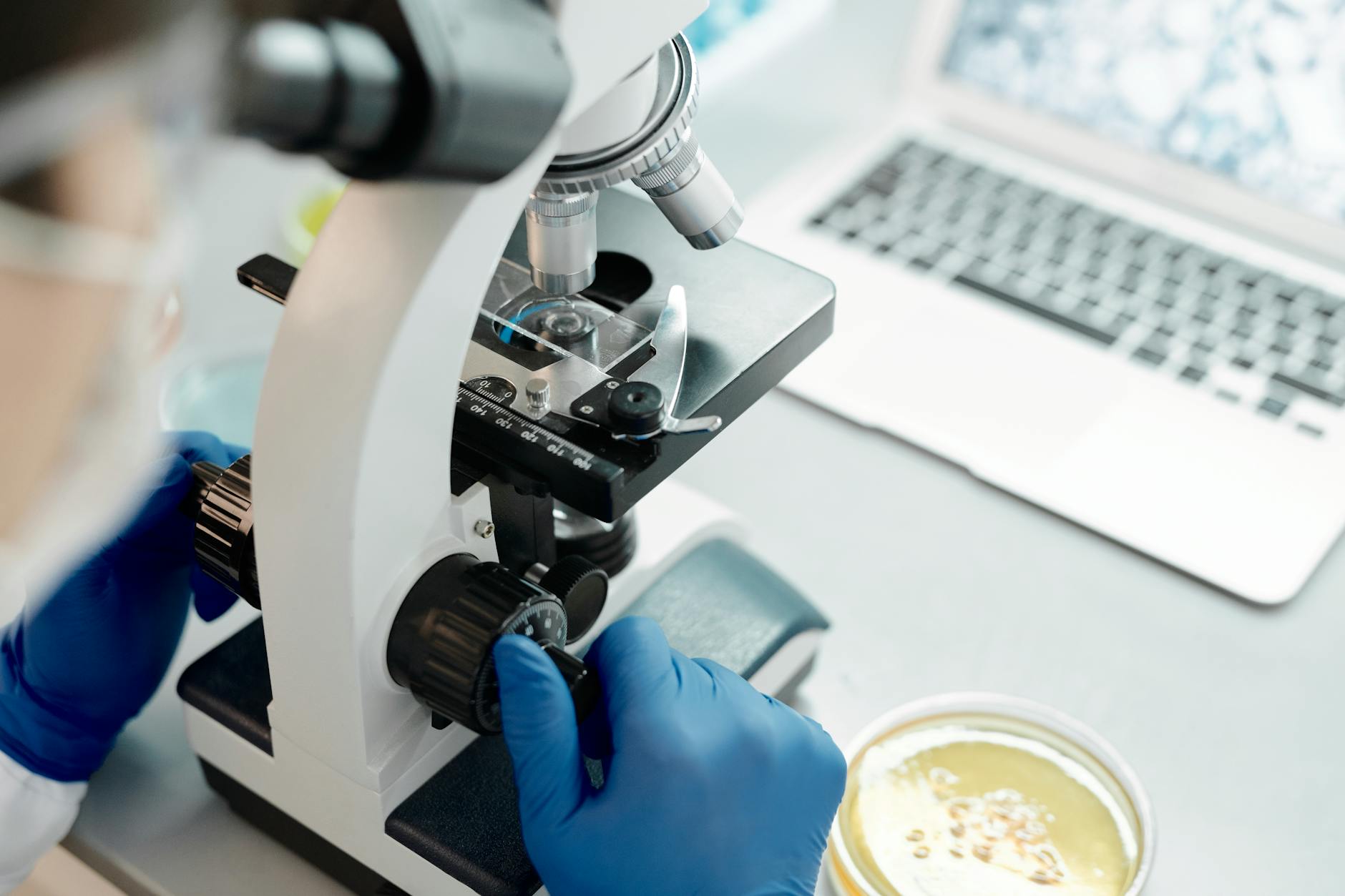
Beautiful Failures: Seven Discoveries That Changed the World Because Someone Messed Up
We love the myth of the lone genius — the person who sees what nobody else can, who follows their vision through the dark until the light finally comes on. It's a good story. It's also, fairly often, not quite how it happens.
Some of the most consequential discoveries in human history arrived not through vision but through error. Through contamination, distraction, stubbornness, and sometimes outright catastrophe. What separated the people on this list from everyone else who has ever ruined an experiment or burned a batch wasn't luck alone — it was the particular quality of attention they brought to their own mistakes. They looked at what went wrong and asked the right question: wait, but what if this is actually something?
Here are seven people who failed their way into changing everything.
1. Alexander Fleming and the Mold That Killed Bacteria (1928)
Fleming was, by most accounts, a brilliant but messy scientist. When he left his London laboratory for a two-week vacation in the summer of 1928, he left behind a stack of petri dishes that he hadn't quite gotten around to cleaning up. When he came back, one of them had been contaminated by a stray mold spore that had drifted in through an open window.
A less curious person would have tossed it. Fleming looked closer. The mold — Penicillium notatum — had created a clear ring around itself in the bacterial culture, a zone where the bacteria had simply ceased to exist. Something in the mold was killing them.
Fleming published his findings, but the scientific community wasn't immediately electrified. It took another decade and the urgency of World War II before Howard Florey and Ernst Chain developed penicillin into a usable antibiotic. By some estimates, the drug has since saved over 200 million lives.
Fleming kept the original petri dish. He called it, with characteristic understatement, "a interesting observation."
2. Roy Plunkett and the Slipperiest Substance on Earth (1938)
Roy Plunkett was a twenty-seven-year-old chemist at DuPont when he made his mistake. He was trying to develop a new refrigerant — a practical, industrial problem with no particular glamour attached to it. He had a canister of tetrafluoroethylene gas stored under pressure, and when he opened the valve one morning, nothing came out.
The canister should have been full. The weight said it was still full. But nothing came out.
Plunkett, rather than chalking it up to a faulty valve and moving on, had the canister cut open. Inside, coating the walls, was a white, waxy powder. The gas had spontaneously polymerized. Plunkett tested the powder. It was almost completely chemically inert. It had the lowest coefficient of friction of any known solid. It didn't stick to anything.
He had discovered polytetrafluoroethylene — what DuPont would eventually trademark as Teflon. It coated the nose cones of early nuclear weapons, the fuel lines of the Apollo spacecraft, and, eventually, about a billion frying pans. Plunkett spent the rest of his career at DuPont as a relatively quiet company man. He was inducted into the National Inventors Hall of Fame in 1985, four years before he died.
3. Percy Spencer and the Chocolate Bar in His Pocket (1945)
Percy Spencer was a self-taught engineer who had never finished grammar school. He had grown up in poverty in rural Maine, lost his father as an infant, and been largely raised by an uncle who died before Spencer was a teenager. By his late thirties, through sheer self-directed study and an almost preternatural mechanical aptitude, he had become one of Raytheon's most valued engineers.
In 1945, he was working with magnetrons — the vacuum tubes that power radar systems — when he noticed something unusual. A chocolate bar in his shirt pocket had melted. Not from body heat. From the microwave radiation emitting from the magnetron he was standing in front of.
Spencer, rather than being annoyed, was immediately curious. He held a bag of popcorn kernels in front of the magnetron. They popped. He tried an egg. It exploded. He began to grasp what was happening: the microwaves were exciting the water molecules inside food, generating heat from the inside out.
The first commercial microwave oven, released in 1947, was nearly six feet tall and weighed 750 pounds. It cost around $5,000. The compact countertop version came decades later. Spencer received no royalties from the invention. He received a $2 bonus from Raytheon, which was apparently standard practice for employee patents at the time.
4. Harry Coover and the Glue That Wouldn't Stop Sticking (1942)
Harry Coover's first encounter with cyanoacrylate was a disaster. He was a chemist working for Eastman Kodak during World War II, trying to develop a clear plastic that could be used in precision gun sights. He synthesized a compound that was chemically interesting but completely useless for his purposes: it bonded to everything it touched, immediately and irreversibly.
It stuck to the testing equipment. It stuck to the instruments. It stuck to things that weren't supposed to stick to anything. Coover set it aside and moved on.
Nine years later, while working on a different project involving heat-resistant coatings for jet canopies, he came across cyanoacrylate again. This time, older and with a different set of questions, he recognized what it actually was: a fast-bonding adhesive unlike anything on the market.
Super Glue was patented in 1956. During the Vietnam War, battlefield medics used a spray version to seal wounds and keep soldiers alive long enough to reach hospitals. Coover went on television in 1959 and demonstrated the glue's strength by lifting a 4,000-pound car with a single drop applied to a steel hook. He is sometimes credited, with some justification, with saving more lives through his accident than through anything he set out to do.
5. John Pemberton and the Headache Syrup That Became a Religion (1886)
John Pemberton was a Confederate veteran and Atlanta pharmacist who was addicted to morphine — a condition he shared with many Civil War soldiers who had been treated with the drug during and after the conflict. He spent years trying to develop a substitute that could wean himself and others off it.
His early attempts included a coca wine, which was popular but fell afoul of local temperance laws. He reformulated, stripping out the alcohol and combining coca leaf extract with kola nut and a proprietary blend of other ingredients to create a syrup he intended to sell as a medicinal tonic for headaches and "nervous disorders."
The syrup was mixed with water at the pharmacy counter. One day — accounts differ on whether it was accident or experiment — it was mixed with carbonated water instead. Customers liked it better. A lot better.
Pemberton sold the rights to Coca-Cola before he fully understood what he had. He died in 1888, broke, having sold the formula for $1,750. The company that bought it is now worth roughly $250 billion. Pemberton's story is often told as a cautionary tale about selling too early, but it's also something else: a reminder that the thing you set out to make and the thing you actually make can be very different animals.
6. Wilson Greatbatch and the Wrong Resistor (1956)
Wilson Greatbatch was an electrical engineer at the University of Buffalo in the mid-1950s, working on a project to record heart rhythms. He was building a circuit to help capture cardiac sounds when he reached into a box and grabbed the wrong resistor — a 1-megaohm component instead of the 10,000-ohm one he needed.
The circuit pulsed. It produced a rhythmic electrical pulse that Greatbatch immediately recognized as almost identical to a human heartbeat.
He sat quietly for two hours, staring at what the wrong resistor had built.
The implantable cardiac pacemaker was patented in 1960. Before Greatbatch's device, pacemakers were external machines the size of a television set that required patients to remain near a power outlet. The implantable version transformed cardiac care. It is estimated that more than three million pacemakers are implanted globally each year. Greatbatch later said that the moment he heard the circuit pulse was the most significant thirty seconds of his life. It came from grabbing the wrong part out of a box.
7. Spencer Silver and the Glue That Wasn't Strong Enough (1968)
Spencer Silver was a 3M chemist who was trying to develop a super-strong adhesive when he produced the opposite: a microsphere-based adhesive that stuck to surfaces but could be peeled away cleanly and re-stuck repeatedly. It bonded without bonding permanently. By the metric he had been working toward, it was a failure.
3M didn't know what to do with it. Silver spent years presenting it internally, convinced it had some application somewhere, unable to identify what that application was. He described the experience later as "a solution in search of a problem."
The problem arrived in 1974 in the form of Art Fry, a 3M colleague who sang in a church choir and was frustrated that the paper bookmarks in his hymnal kept falling out. He remembered Silver's adhesive from an internal seminar and applied a strip of it to a piece of paper.
The Post-it Note was launched commercially in 1980. 3M now sells them in more than 100 countries. Silver has said, with characteristic modesty, that the real invention was Fry's — the act of seeing the right application for a solution that had been sitting around for six years, waiting for someone to ask the right question.
The Pattern in the Accidents
None of these people stumbled into greatness because they were lucky. They were lucky and prepared — prepared by years of expertise, prepared by a habit of curiosity, prepared by the particular willingness to stop and ask why did that just happen? instead of cleaning it up and moving on.
The accident, in every case, was just the door. What mattered was who was standing on the other side of it when it opened.