The Town Was Finished. Nobody Told These People.
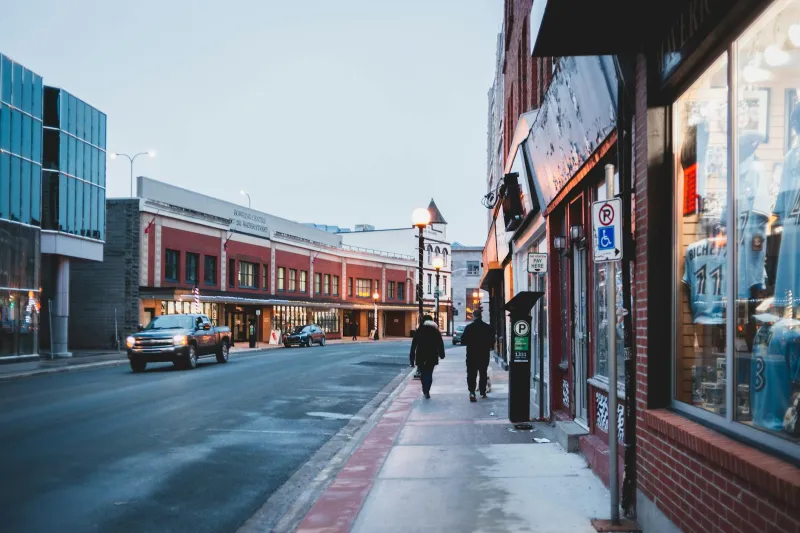
The Town Was Finished. Nobody Told These People.
Every few years, a new report comes out documenting the decline of rural America — the population losses, the closed storefronts, the schools consolidating, the young people leaving and not coming back. The numbers are real. The trend is real.
But trends have exceptions. And the exceptions, when you look closely at them, tend to have one thing in common: somewhere in the story, there's a person who refused to accept the obvious conclusion. Someone who looked at a dying town and decided — irrationally, stubbornly, sometimes a little absurdly — that it wasn't done yet.
Here are seven of them.
1. Monowi, Nebraska — Population: One
At its peak in the 1930s, Monowi had a few hundred residents, a handful of businesses, and the ordinary, unremarkable vitality of a small Nebraska farming community. By 2004, the last remaining resident was Elsie Eiler, who was 67 years old and had no plans to leave.
When her husband Rudy died that year, Elsie became, officially, the only incorporated municipality in the United States with a population of one. She is the mayor. She is also the town clerk, the treasurer, and the liquor license holder for the tavern she runs — which she grants to herself each year by writing her own name on the application.
The Monowi Tavern is open. People drive from hours away to have a beer there, partly out of curiosity and partly because Elsie is genuinely good company. She also maintains a small library of over 5,000 books that Rudy collected over his lifetime, open to anyone who wants to visit.
Monowi hasn't exactly boomed. But it exists, stubbornly, because one woman decided that leaving wasn't something she was interested in doing.
2. Centralia, Pennsylvania — The Town That Wouldn't Evacuate
In 1962, a fire started burning in the abandoned coal mines beneath Centralia, a small borough in the anthracite coal region of eastern Pennsylvania. It has been burning ever since. The ground occasionally cracks open. Carbon monoxide seeps through the soil. The state government spent decades buying out residents and relocating them, and by the 2010s, the official population had dropped to a handful.
But a small group of residents refused to leave. Some were elderly people who had lived there their entire lives. Some were younger people who had grown up in the area and felt that the state's buyout program was less an act of concern than an act of erasure.
Among them was a woman named Joan Girolami, who fought the state's condemnation orders for years, arguing that the government's response to the fire had been incompetent and that the residents who remained were being punished for the state's failure to contain the blaze in the first place. She wasn't entirely wrong.
Centralia today is mostly empty land and cracked roads. But the holdouts who stayed — and their legal battles — forced a decades-long public reckoning with how governments handle environmental disasters in poor communities. The story of what they refused to accept became part of the town's permanent record.
3. Greensburg, Kansas — The Tornado Town That Built Back Weird
On May 4, 2007, a tornado with winds exceeding 200 miles per hour hit Greensburg, Kansas, and destroyed 95 percent of the town. Eleven people died. The community of about 1,500 was left with almost nothing.
Most disaster recovery stories follow a familiar script: federal aid, insurance claims, rebuilding what was there before. Greensburg's mayor at the time, Lonnie McCollum, had a different idea. He proposed rebuilding the entire town to LEED platinum standards — making it one of the greenest cities per capita in the United States.
This was not a universally popular idea in rural southwest Kansas. Some residents thought it sounded expensive, impractical, and like something cooked up by people who didn't understand how small towns actually worked.
McCollum pushed anyway. He worked with state officials, environmental organizations, and federal agencies to secure funding and technical support. The rebuilt Greensburg features wind-powered municipal buildings, energy-efficient homes, and a business district designed around sustainability principles that most cities ten times its size haven't attempted.
Population is still modest, but Greensburg is now a case study in disaster recovery that gets cited internationally. A tornado took everything. A stubborn mayor decided to build something better than what was there before.
4. Braddock, Pennsylvania — The Mayor Who Tattooed the Town's ZIP Code on His Arm
Braddock was once the steel capital of western Pennsylvania. By the early 2000s, it had lost 90 percent of its population since its peak, its main street was largely abandoned, and its budget was so depleted that the borough couldn't afford to maintain basic services.
Then John Fetterman showed up.
Fetterman — who would later become a US Senator — was a Harvard-educated social worker who moved to Braddock in 2001 to run an AmeriCorps program. He fell in love with the place in the way that only someone from the outside can, and he ran for mayor in 2005 on a platform that was essentially: I will not give up on this town.
He won by a single vote. He tattooed the dates of every homicide that occurred during his tenure on his left forearm and Braddock's ZIP code — 15104 — on his right. He lived in a converted car dealership. He recruited artists and urban farmers and small manufacturers to move into the empty spaces left by the steel industry's collapse.
Braddock didn't transform into a prosperous suburb. But it stabilized. It became a symbol — of what a town can still be when someone refuses to accept the story that's being written about it.
5. Harmony, Minnesota — The Town That Bet on Amish Tourism
Harmony, in the bluff country of southeastern Minnesota, was a farming community facing the same slow erosion that hit hundreds of small Midwestern towns in the 1980s and '90s: young people leaving, family farms consolidating, the commercial center hollowing out.
What Harmony had that most towns didn't was a large and established Amish community in the surrounding countryside. Local businesswoman Billie Gausman looked at that and asked a question that nobody had thought to ask: Why isn't anyone coming here to see this?
She started organizing buggy tours of the Amish farms in the 1980s, working carefully and respectfully with community members to create something that was genuinely educational rather than exploitative. She partnered with local B&Bs, restaurants, and shops to build a small but sustainable tourism ecosystem around what had always been right there.
Harmony today draws visitors from across the Midwest and beyond. It's not a boomtown. But it's a town that found a reason for people to show up — and it found it by looking at what it already had rather than mourning what it had lost.
6. Bisbee, Arizona — The Mining Town That Became an Art Colony
Bisbee sits in the Mule Mountains of southeastern Arizona, near the Mexican border. It was built on copper, and when the Phelps Dodge Corporation closed the Lavender Pit mine in 1975, it looked like the town would follow the ore into the ground.
Instead, something unexpected happened. The empty Victorian houses — built for mine managers and workers during Bisbee's boom years — were cheap. Dramatically cheap. And cheap Victorian houses in a high-desert mountain town with good weather turned out to be exactly what a certain kind of artist, writer, and dropout from mainstream American life was looking for.
They came. Slowly at first, then in a steady trickle. A ceramicist named Leila Vandiver was among the early arrivals, and she later described the town as feeling like a place that had been left behind by one era and was simply waiting for the next one to find it.
Bisbee today is a genuinely strange and lovely town — art galleries in old mining offices, restaurants in repurposed Victorian storefronts, a population that is roughly equal parts old-timers and newcomers. The mine is gone. The town isn't.
7. Iuka, Mississippi — The Pharmacist Who Refused to Let the Downtown Go
Iuka is a small town in the northeastern corner of Mississippi that lost its economic anchor when a major employer relocated in the 1990s. The downtown, like downtowns in hundreds of similar towns across the South, began to empty out. Storefronts went dark. The foot traffic that had sustained small businesses for generations simply stopped.
A local pharmacist named Robert Smithwick, who had run his family's drugstore on Main Street for thirty years, started buying up the vacant buildings around him rather than watching them deteriorate. He had no master plan. He just couldn't stand watching the street he'd grown up on become a row of empty windows.
He renovated them slowly, leasing space at below-market rates to anyone with an idea — a coffee shop, a used bookstore, a small gallery, a barbershop. He wasn't a developer. He was a pharmacist with a savings account and a stubborn attachment to a place.
The Iuka downtown didn't become a destination. But it stayed alive. The buildings are occupied. The street has a pulse. And it has one largely because a man who sold aspirin and blood pressure medication for a living decided that his town's story wasn't finished.
What They All Have in Common
None of these people had a guaranteed plan. Most of them had limited resources, skeptical neighbors, and very good reasons to walk away. What they shared was a refusal to accept that the verdict on their community was final.
Sometimes that refusal looked like stubbornness. Sometimes it looked like delusion. Occasionally it looked, from the outside, like outright eccentricity.
But the towns are still there. And that, in the end, is the whole argument.