The Woman in the Shadows: How a Stenographer Rewrote Labor Law Without Anyone Noticing
The Woman in the Shadows: How a Stenographer Rewrote Labor Law Without Anyone Noticing
In the 1930s, congressional stenographers occupied an odd position in American government. They were essential—nothing official could happen without a complete transcript—and completely invisible. They sat in the margins of history, recording it, never making it.
Luella Twining occupied that position more thoroughly than most. And then she rewrote labor law from within it.
The Job Nobody Noticed
Twining came to her work as a stenographer in the 1930s with an unusual combination of skills: she was technically excellent at her job—fast, accurate, meticulous—and she had a sophisticated understanding of labor law. In an era when most stenographers were there to transcribe and disappear, Twining was paying attention to the substance of what she was recording.
She was hired to sit silently in congressional hearings, take down every word in shorthand, and produce clean transcripts. That was the job. That was the entire job. Stenographers didn't speak. They didn't contribute. They didn't have opinions. They were human recording devices, present but not participating.
Twining was good at being present. She was not good at being absent.
The Margins Become the Message
What happened next was subtle enough that it could have gone unnoticed entirely. As Twining sat through hearings on labor protections, workplace safety, and wage laws, she began to notice patterns. Witnesses would make claims that seemed legally or factually questionable. Legislators would miss loopholes in proposed language. Important distinctions would slip past unexamined because no one in the room had the specific expertise to catch them.
Twining had that expertise. And she had something else: access.
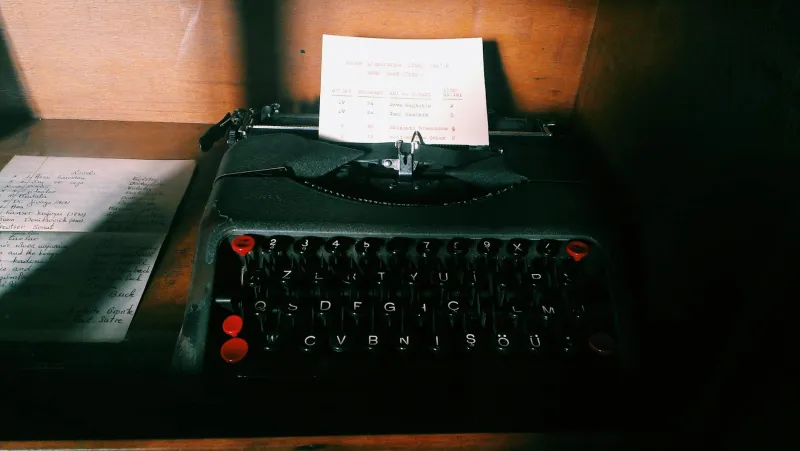
She began leaving handwritten notes for sympathetic legislators—members of Congress who seemed genuinely interested in strengthening labor protections. The notes were brief, careful, and precisely targeted. She'd flag a factual error in testimony. She'd point out a loophole in proposed bill language. She'd suggest a rewording that would close a gap in legal protection. She never signed her name. She never took credit. She simply left information in the hands of people who could use it.
The legislators had no idea who was leaving the notes. They assumed it was a colleague, another staffer, someone working behind the scenes. They incorporated the corrections and suggestions into their work. The notes shaped the language of bills that became law.
The Invisibility Advantage
What made Twining's strategy work was the same thing that made her position so marginal: nobody was watching. Stenographers were furniture. They were expected to be there, performing a mechanical function, contributing nothing beyond the transcript.
No one suspected that the stenographer was also a shadow lobbyist for labor protections.
If Twining had tried to influence legislation openly, she would have faced immediate resistance. She wasn't a legislator. She wasn't an official advisor. She wasn't supposed to have opinions or influence. The moment she stepped out of her role as stenographer, she would have lost access entirely. She would have been removed from the hearings, dismissed from her position, and excluded from the conversations she was trying to shape.
But because she stayed in her role—because she remained invisible, silent, present—she could operate in a space where no one was watching her. She could leave notes and disappear. She could suggest changes without attaching her name. She could influence the outcome without becoming visible enough to be stopped.
Her marginality was her protection. Her invisibility was her power.
The Work That Never Got Credited
Luella Twining's contributions to American labor law are impossible to fully quantify because they were never formally credited. She left no public record of her influence. She gave no speeches. She published no articles. She didn't lobby openly or build a reputation. She simply left notes.
But the labor protections that emerged from the 1930s and 1940s—legislation that established minimum wages, limited working hours, protected child labor, and established safety standards—carried her fingerprints even though her name never appeared anywhere.
Historians have struggled to document her role precisely because she was so successful at remaining undocumented. The legislators she helped didn't publicly credit her. The bills she influenced don't cite a stenographer's contributions. The transcripts she produced were considered her complete function—the notes she left were supposed to be invisible.
Twining died without public recognition for her work. She was never celebrated as a labor advocate. She never received honors or acknowledgment. She remained, in the official record, simply a stenographer—someone who was there but didn't matter.
Except she had mattered profoundly. She had shaped protections that affected millions of American workers. She had influenced the course of labor law in one of the most consequential periods in American history. And she had done it entirely from the margins.
The Strategy of Strategic Silence
There's something almost subversive about Twining's approach. In an era when women were expected to be silent and decorative, she used silence as a tool of influence. In a position designed to be marginal, she used marginality as cover for meaningful work. In a role that demanded invisibility, she leveraged that invisibility to operate beyond scrutiny.
She didn't fight her position. She didn't demand recognition or a seat at the table. She didn't try to become visible or important. She simply worked within the constraints of her role and used those constraints to do something that mattered.
There's a particular kind of power in that approach. It's the power of someone who understands that visibility isn't always an advantage—that sometimes being overlooked is the only way to accomplish what you're trying to accomplish.
A Legacy Without a Name
Luella Twining's story is almost impossible to research because she was so thoroughly invisible. Her name doesn't appear in histories of labor law. She's not mentioned in biographies of the legislators she influenced. She exists in the margins of the historical record, noted only occasionally in obscure references to stenographers who "may have" influenced legislation.
But her work is everywhere in the labor protections that emerged from her era. Every minimum wage law, every workplace safety regulation, every protection against child labor carries some mark of her influence—even though no one knows her name and she never sought recognition for what she did.
Twining's story cuts against the modern instinct to claim credit, build a personal brand, and make your contributions visible. She did the opposite. She remained invisible, influenced from the shadows, and left no trace of her own ambition.
Which is precisely why she was able to do the work that mattered.
In a world obsessed with visibility and personal credit, Luella Twining accomplished something remarkable by refusing both. She shaped American law from a position of complete marginality. She influenced history from a role that was supposed to be mechanical and empty. She mattered profoundly while remaining entirely unknown.
The stenographer in the corner, taking notes, leaving handwritten suggestions. The woman no one was watching. The invisible architect of protections that millions of Americans depend on today.
She was there. She was paying attention. And she changed everything—without anyone noticing her name.