The Man Who Saw Treasure in What Everyone Else Threw Away
The Man Who Saw Treasure in What Everyone Else Threw Away
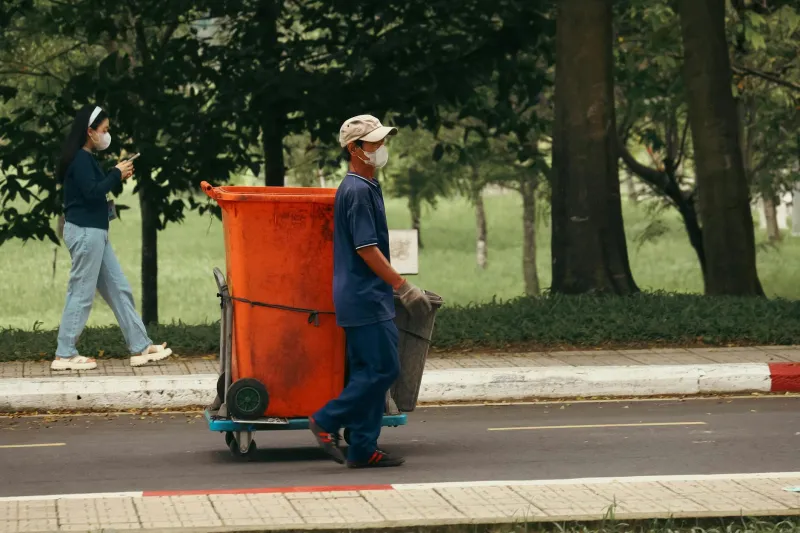
Every morning at 4 AM, Nelson Molina would clock in at the Department of Sanitation garage on East 99th Street in Manhattan. While the city slept, he'd begin his rounds through the Upper East Side, collecting what New York had decided it no longer wanted. But unlike his colleagues, Molina wasn't just hauling trash to the dump. He was curating.
For over two decades, this quiet sanitation worker built something that would make museum directors weep with envy: a collection of 50,000 objects rescued from the streets, each one a small piece of someone's discarded life. Hidden away in a corner of that same East Harlem garage where he started his shifts, Molina created what might be the most honest museum in New York City.
The Accidental Collector
Molina never set out to become a collector. Born in the Dominican Republic and raised in Washington Heights, he took the sanitation job in 1981 because it offered steady work and good benefits. The plan was simple: show up, do the job, go home.
But something happened on those early morning routes. While loading bags into his truck, Molina began noticing things that seemed too good to throw away. A perfectly functional clock radio. A leather-bound photo album. A child's toy that had clearly been loved. "I started thinking about the stories," he would later explain. "Every piece of trash has a story."
What started as an occasional rescue became a daily ritual. Molina would spot something interesting, set it aside, and bring it back to the garage. His supervisor initially worried about the growing pile in the corner, but Molina was such a reliable worker that management eventually looked the other way.
Building Something from Nothing
As the collection grew, Molina began organizing it with the methodical precision of a trained curator. He built shelves from discarded wood, sorted objects by type and era, and even created handwritten labels for the most interesting pieces. The garage corner transformed into something that looked suspiciously like a real museum.
There were entire sections devoted to different decades of New York life: rotary phones from the 1960s, Walkmen from the 1980s, early cell phones from the 1990s. He had collections within collections: hundreds of eyeglasses, vintage cameras, children's toys spanning generations, and enough books to stock a small library.
But this wasn't just random hoarding. Molina had an eye for objects that captured something essential about how people lived. A teenager's diary from 1987. A World War II veteran's medals. A grandmother's recipe box filled with handwritten cards. Each item represented a moment when someone decided to let go of a piece of their past.
The Invisible Museum
For years, Molina's museum existed in a strange limbo. City workers knew about it, and word gradually spread through the neighborhood. People began stopping by during his lunch breaks, amazed by what they found. Art students discovered it and brought their professors. Journalists caught wind of the story.
Yet the collection remained officially invisible. The city couldn't exactly endorse a sanitation worker turning a garage into an unauthorized museum, but they couldn't bring themselves to shut it down either. Molina had created something genuinely beautiful from what everyone else had thrown away.
The irony wasn't lost on visitors. Here was a man with no formal training in art or museum studies, working a job that society barely notices, who had assembled a more authentic portrait of New York life than most official cultural institutions.
What Gets Saved
Molina's collection raises uncomfortable questions about what we value and what we discard. While uptown galleries sold paintings for millions, he was rescuing family photographs from the trash. While museums charged admission to see carefully curated exhibitions, his garage offered free glimpses into the real lives of ordinary people.
"People throw away their whole lives," Molina observed. "But someone should remember."
His collection became a kind of archaeological record of late 20th-century urban life. Visitors could trace the evolution of technology, fashion, and domestic life through the objects that families had decided to abandon. It was social history written in discarded belongings.
The Unexpected Legacy
When Molina retired in 2015, the question of what would happen to his collection became urgent. The city eventually worked out a deal to preserve portions of it, with some pieces going to the Museum of the City of New York and others remaining on display in the sanitation garage.
But the real legacy isn't the objects themselves. It's the reminder that extraordinary vision can emerge from the most ordinary circumstances. While others saw garbage, Molina saw stories. While others saw trash, he saw treasure.
His museum stands as proof that the most important cultural work sometimes happens in the shadows, built by people who never expected to be remembered. In a city full of monuments to wealth and power, Nelson Molina created something different: a monument to the things we throw away and the stories we forget.
Sometimes the most profound art isn't created in studios or galleries. Sometimes it's rescued from the curb by someone who understands that one person's trash really can be another person's treasure — especially when that person has the vision to see what everyone else missed.