Nobody Wanted the Diner on the Corner. He Bought It Anyway — and Fed Chicago for Fifty Years.
Nobody Wanted the Diner on the Corner. He Bought It Anyway — and Fed Chicago for Fifty Years.
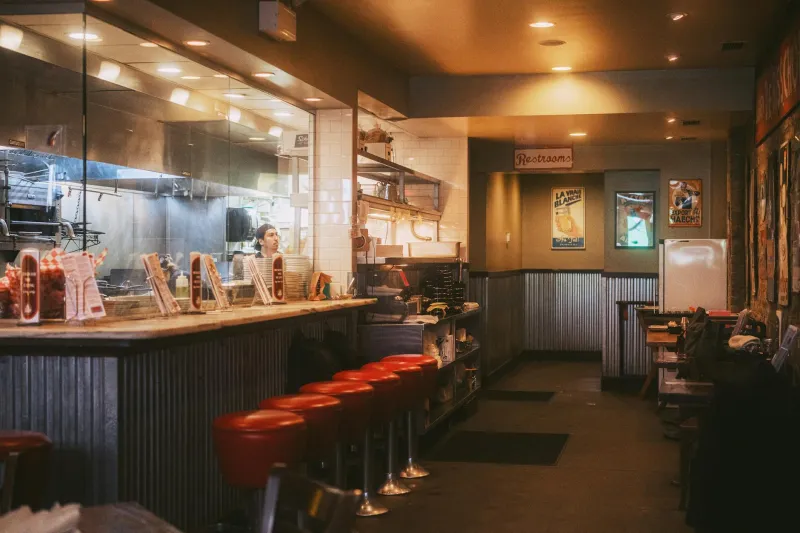
The sign above the door was missing two letters. The counter stools wobbled. The coffee urn had been broken for so long that the previous owner had stopped apologizing for it and simply stopped mentioning it. The diner at the corner of Halsted and 18th had cycled through three operators in five years, and every one of them had left broke, exhausted, or both.
When Stavros Papadimitriou walked through that door in the winter of 1931, he had $200 in his coat pocket, a working vocabulary of maybe 400 English words, and absolutely no experience running a restaurant. He had been in Chicago for three years, washing dishes at a Greek-owned steakhouse on the North Side. Before that, he had been a goat farmer in a village outside Thessaloniki.
He signed the lease the same afternoon.
The Advantage Nobody Talks About
There's a particular kind of freedom that comes with having almost nothing. When you don't have a reputation to protect, a financial cushion to fall back on, or a social network telling you what's acceptable, you tend to make decisions that more comfortable people would never dare to make.
Stavros had no idea that the Halsted Street lunch counter was supposed to be a failure. He didn't know its history. He couldn't read the local newspaper columns that had written it off. What he saw was a room with a kitchen, a location near a streetcar stop, and a neighborhood full of factory workers who needed to eat lunch somewhere.
He fixed the coffee urn himself, using a technique he'd learned watching a mechanic repair a water pump back in Greece. He replaced the wobbly stools with mismatched chairs he bought for almost nothing from a church that was clearing out its hall. He couldn't afford a printed menu, so he wrote the day's offerings on a chalkboard in large, careful letters — partly to help customers read it easily, and partly because his handwriting in English was still slow and deliberate enough that it forced him to keep the menu short.
That accident of necessity turned out to be one of his best business decisions.
A Short Menu and an Open Door
In the 1930s, a lot of Chicago diners operated on the assumption that customers wanted options. Long menus signaled value. Stavros couldn't afford that logic, so he offered four items at lunch and five at dinner, rotating them weekly based on what was cheapest at the market that morning.
What he lost in variety, he made up for in consistency. Regulars knew that if they came in on a Tuesday, the bean soup was going to be exactly the same as it was last Tuesday. In a decade when very little else in working-class Chicago felt reliable, that turned out to matter enormously.
He also did something that the neighborhood's other lunch counters didn't do: he let people run a tab.
This wasn't a formal credit system. There was no paperwork. If a man came in and said he'd had a rough week at the stockyards and could he pay on Friday, Stavros wrote the amount in a small notebook he kept under the counter and said yes. He got stiffed occasionally. More often, people paid back what they owed and kept coming back for years because of how they'd been treated when they were short.
His wife, Maria, who joined him from Greece in 1933, later said that the notebook was his real business plan.
What the Guidebooks Missed
By the mid-1940s, the diner — which Stavros had renamed simply Papadimitriou's, because he felt a place should know who it belonged to — had become something that food writers and city planners rarely bother to document: a genuine neighborhood institution.
It wasn't fancy. It never made the kind of list that attracted tourists or food critics. But it fed three generations of families from the surrounding blocks. It was where people went after funerals and after baptisms. It was where the night-shift workers came at 6 a.m. and where the lunch crowd from the nearby printing plant filled every seat at noon.
Stavros died in 1974, and his daughter Elena ran the place until 1989, when the building was sold to make way for a parking structure. By then, the diner had outlasted four recessions, two neighborhood demographic shifts, and the rise and fall of at least a dozen trendier restaurants within a half-mile radius.
The Broader Pattern
Stavros's story isn't unique — it's part of a much larger pattern that American business history tends to undercount. Greek immigrants built a significant portion of the country's diner culture in the early twentieth century, particularly in the Midwest and the Northeast. Many of them started exactly the way Stavros did: with limited capital, limited English, and an almost reckless willingness to take over spaces that established operators had abandoned.
The same pattern shows up in Chinese-owned laundries in the 1880s, in Jewish-owned garment shops in lower Manhattan at the turn of the century, in Korean-owned grocery stores in urban neighborhoods in the 1970s and '80s. Outsiders taking the leftovers and building something lasting out of them.
Economists sometimes call this "adversity-driven entrepreneurship" — the idea that people with fewer fallback options take bigger swings and adapt more aggressively because they have to. The politer version of the same idea is that necessity is the mother of invention. The street-level version is simpler: when you have nothing to lose, you try things.
What a Broken Coffee Urn Teaches You
There's a version of the Stavros story that gets told as pure inspiration — the immigrant who made it through hard work and determination. That version isn't wrong, but it's incomplete.
What made him succeed wasn't just effort. It was the specific advantages his disadvantages gave him. He couldn't read the newspaper columns predicting his failure. He couldn't afford the long menu that would have made his kitchen inconsistent. He didn't know enough about Chicago's restaurant culture to know that letting customers run informal tabs was considered a bad idea.
Every single thing that looked like a limitation turned out to be a feature.
The diner on the corner that nobody wanted ran for 58 years. The parking structure that replaced it lasted 22 before it was torn down.
There's a lesson in there somewhere. Stavros probably would have just shrugged and said he got lucky. But then, people who fix broken coffee urns with techniques borrowed from Greek water pumps tend to make their own luck.