Saddle Sore and Proud: The Ranch Hand Who Couldn't Stay on a Horse But Built the Modern Rodeo
The American West was built by people who could ride anything with four legs and a bad attitude. So when William "Tex" Austin showed up at the 101 Ranch in Oklahoma in 1903, nobody expected him to last a week.
Tex had two problems: he was terrible at roping, and even worse at staying on a horse. While other cowboys made riding look effortless, Tex hit the dirt so often that the other hands started calling him "Groundhog." It should have been the end of his cowboy dreams.
Instead, it was the beginning of something much bigger.
The Cowboy Who Studied Cowboys
Most ranch hands just did their jobs and went home. But Tex, nursing his bruises and his wounded pride, started paying attention to how the good riders did what they did. He watched, he took notes, and he started asking questions that nobody else bothered to ask.
Why did some horses buck harder than others? What made certain riders better at staying on? How long could a man actually stay mounted on a truly wild bronco before physics took over?
While his colleagues saw cowboy work as just that—work—Tex began to see it as a collection of skills that could be measured, compared, and turned into competition.
From Failure to Fascination
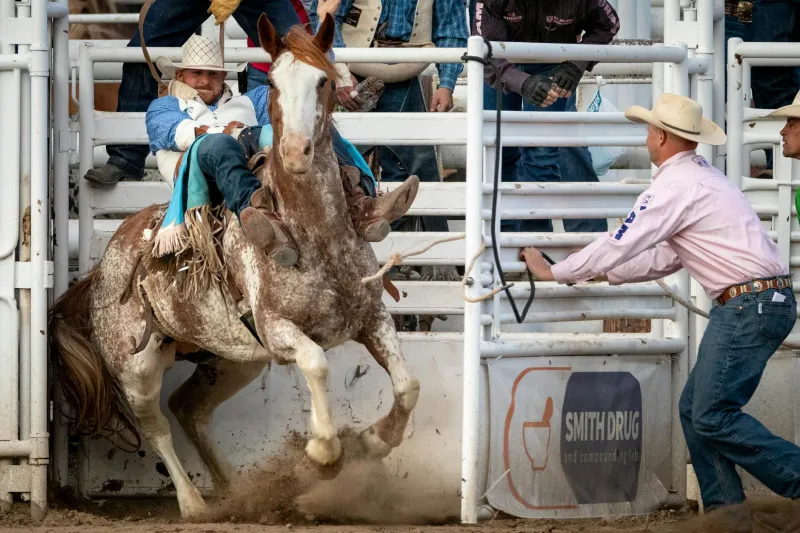
Tex's breakthrough came during a particularly humiliating day in 1905. He'd been thrown by the same horse three times in a row, and the other cowboys were having a good laugh at his expense. But instead of getting angry, Tex started timing how long each rider stayed on.
What he discovered changed everything: even the best cowboys rarely stayed on a bucking bronco for more than ten seconds. The difference between "good" and "bad" riders wasn't as dramatic as everyone thought—it was often just a matter of a few seconds.
That realization sparked an idea. What if those few seconds could be the difference between winning and losing? What if cowboy skills could become cowboy sports?
The Birth of Rules
By 1908, Tex had developed the first formal rules for bronco riding competition. Eight seconds became the standard—long enough to prove skill, short enough to be survivable. He created point systems for style and technique, established safety requirements, and even designed the first standardized rodeo arena.
The irony wasn't lost on anyone: the worst rider on the ranch had become the authority on how riding should be judged.
But Tex wasn't done. He applied the same analytical approach to every aspect of ranch work. Calf roping became a timed event with specific rules about technique. Bull riding got its own scoring system. Even the rodeo clowns—originally just entertainment—became an essential safety feature under Tex's systematic approach.
Building an American Institution
In 1915, Tex organized what many consider the first true professional rodeo in Calgary, Canada. Unlike the chaotic cowboy exhibitions that had come before, this was a carefully structured competition with standardized rules, professional judges, and substantial prize money.
The event was a massive success, drawing competitors and spectators from across North America. More importantly, it established the template that rodeos still follow today: the same events, the same time limits, the same scoring systems that Tex had developed while trying to figure out why he kept falling off horses.
Within a decade, Tex was organizing rodeos across the American West and beyond. He created the first rodeo circuit, established the first professional cowboy organization, and even convinced Madison Square Garden to host indoor rodeos for Eastern audiences who'd never seen the real thing.
The Outsider's Advantage
Tex's story reveals something profound about innovation: sometimes the person least qualified to do something is the most qualified to improve it. Because he couldn't rely on natural talent, he had to understand the mechanics of what made cowboy skills work.
The best riders didn't need to think about technique—they just rode. But Tex, who had to think about every aspect of staying on a horse, understood the sport in a way that natural athletes never could.
His systematic approach turned individual skills into standardized competitions. His focus on safety—born from personal experience with getting hurt—made rodeo sustainable as a professional sport. His outsider's perspective helped him see possibilities that insiders missed.
The Legacy of Getting Thrown
By the 1920s, Tex Austin was known as "America's Rodeo King," organizing events that drew hundreds of thousands of spectators. The cowboy who couldn't stay on a horse had become the man who defined how cowboy competitions should work.
Today's Professional Rodeo Cowboys Association still uses rules and standards that trace directly back to Tex's innovations. The eight-second ride, the point systems, the arena designs, the safety protocols—all of it began with a ranch hand who was tired of being embarrassed by his own inadequacy.
The Beautiful Irony
Tex Austin never did become a great rider. Even at the height of his success as a rodeo promoter, he was still more comfortable organizing events than competing in them. But his limitation became his superpower: he understood rodeo not as a participant, but as a student.
Sometimes the people who struggle most with something are the ones who understand it best. They have to break it down, analyze it, and rebuild it in a way that makes sense. In doing so, they often create something better than what existed before.
Tex Austin couldn't stay on a horse, but he could stay focused on making rodeo better. And in the end, that made all the difference.