
The Beautiful Rebellion of Refusing to Quit
Sometimes the best advice is the advice you ignore. Throughout American history, some of our most transformative figures have been people who were explicitly told to stop doing the very thing that would eventually define their legacy. These aren't stories of gentle discouragement or well-meaning guidance—these are tales of people who were flat-out ordered to quit, then chose to rebel in the most productive way possible.
1. Ray Kroc: The Milkshake Machine Salesman Everyone Called Delusional
What he was told to quit: Obsessing over a small burger stand in California
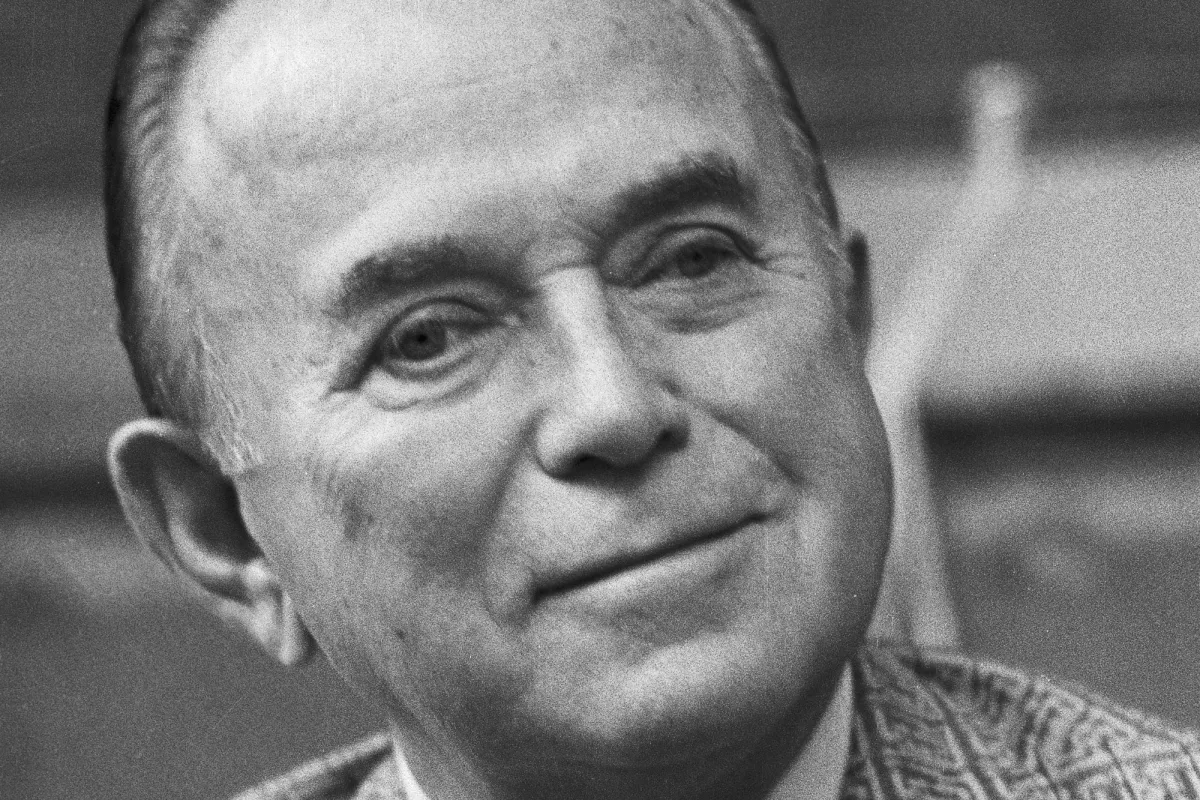 Photo: Ray Kroc, via www.the-sun.com
In 1954, Ray Kroc was a 52-year-old traveling salesman peddling milkshake machines to restaurants across America. It wasn't glamorous work, but it paid the bills. Then he visited a small operation in San Bernardino run by the McDonald brothers, and something clicked. He became obsessed with their efficient system, convinced he could franchise it nationwide.
Everyone thought he'd lost his mind. His wife begged him to stick with the steady income. His business partners called him a fool for chasing "some crazy burger idea." Industry experts laughed at the notion that Americans wanted identical restaurants serving identical food. At 52, they said, he should be planning retirement, not starting over.
Kroc ignored them all. He mortgaged his house, liquidated his savings, and threw everything into franchising McDonald's. His obsession with systematization and consistency—the very traits that made him seem crazy to others—became the foundation of the modern fast-food industry. By the time he died, McDonald's was serving 50 million customers daily across six continents.
2. Grandma Moses: The Farm Wife Who Started Painting at 78
What she was told to quit: Wasting time on "childish" artwork
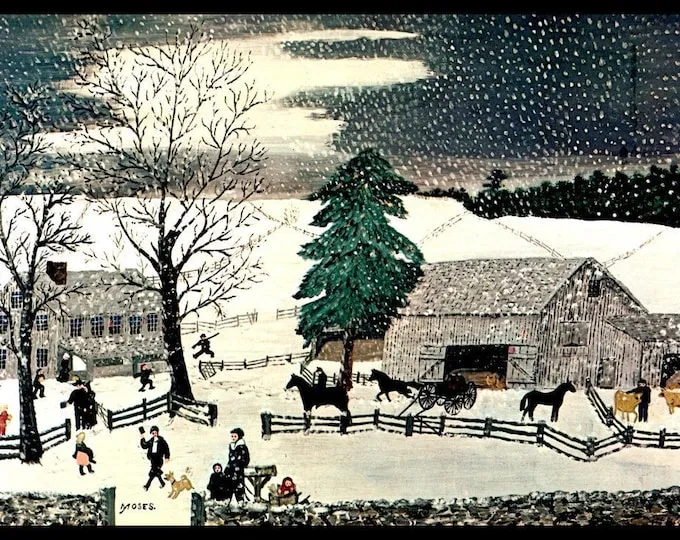 Photo: Grandma Moses, via i.etsystatic.com
Anna Mary Robertson Moses spent most of her life as a farm wife in rural New York, raising children and managing household duties. Art was just a hobby—something she did to decorate her home or give as gifts. When arthritis made her traditional embroidery too painful, she switched to painting at age 78.
Her family was mortified. Painting was for children or "real artists," not elderly farm women. Neighbors whispered that she was having some kind of breakdown. Even the local art supply store owner suggested she take up something more "appropriate" for her age, like reading or knitting.
Moses kept painting anyway, creating vibrant scenes of rural American life. A New York art collector discovered her work in a drugstore window in 1938, and within two years, "Grandma Moses" was having solo exhibitions in Manhattan galleries. Her "primitive" style, dismissed by locals as amateur, was celebrated by critics as authentically American. She continued painting until her death at 101, creating over 1,500 works and inspiring a generation of artists to start creating regardless of their age or training.
3. Sam Walton: The Small-Town Retailer Who Thought Too Big
What he was told to quit: Opening discount stores in tiny rural towns
In the early 1960s, Sam Walton was running a successful variety store in Newport, Arkansas, but he had a crazy idea: what if you could bring big-city discount prices to small rural towns? Every retail expert told him it was impossible. Small towns couldn't support large stores. Rural customers wouldn't shop for volume discounts. The economics simply didn't work.
Walton's own suppliers refused to work with him, convinced his rural strategy would fail. Banks wouldn't lend him money for expansion. Industry publications mocked his plan to put large discount stores in towns with fewer than 10,000 people. "Stick to what works," they advised. "Stop chasing impossible dreams."
Instead, Walton opened his first Walmart in Rogers, Arkansas, in 1962, targeting exactly the small-town market everyone said wouldn't work. His understanding of rural customers—their desire for value, their loyalty to stores that served them well—proved more accurate than all the expert analysis. By the time of his death in 1992, Walmart was America's largest retailer, and Walton was the richest man in the country.
4. Julia Child: The Diplomat's Wife Who Couldn't Cook
What she was told to quit: Trying to master French cooking
When Julia Child enrolled in Le Cordon Bleu cooking school in Paris in 1949, she was a 37-year-old American diplomat's wife who could barely boil water. Her first attempts at French cuisine were disasters. Her instructors were polite but clear: perhaps she should stick to simpler American recipes. Even her husband gently suggested that cooking might not be her calling.
Child's classmates, mostly young French students training for professional careers, whispered that the tall American woman was wasting everyone's time. Her knife skills were terrible, her timing was off, and her pronunciation of French culinary terms was embarrassing. Several instructors suggested she might be happier taking a wine appreciation class instead.
But Child was determined to crack the code of French cooking. She practiced obsessively, filling notebook after notebook with detailed observations about techniques, temperatures, and timing. Her methodical, almost scientific approach to cooking—the very thing that made her seem hopelessly amateur—became her greatest strength. "Mastering the Art of French Cooking" revolutionized American home cooking by making complex French techniques accessible to ordinary cooks. Child proved that passion and persistence could overcome any lack of natural talent.
5. Colonel Sanders: The Failed Businessman Who Wouldn't Give Up
What he was told to quit: Trying to sell his chicken recipe
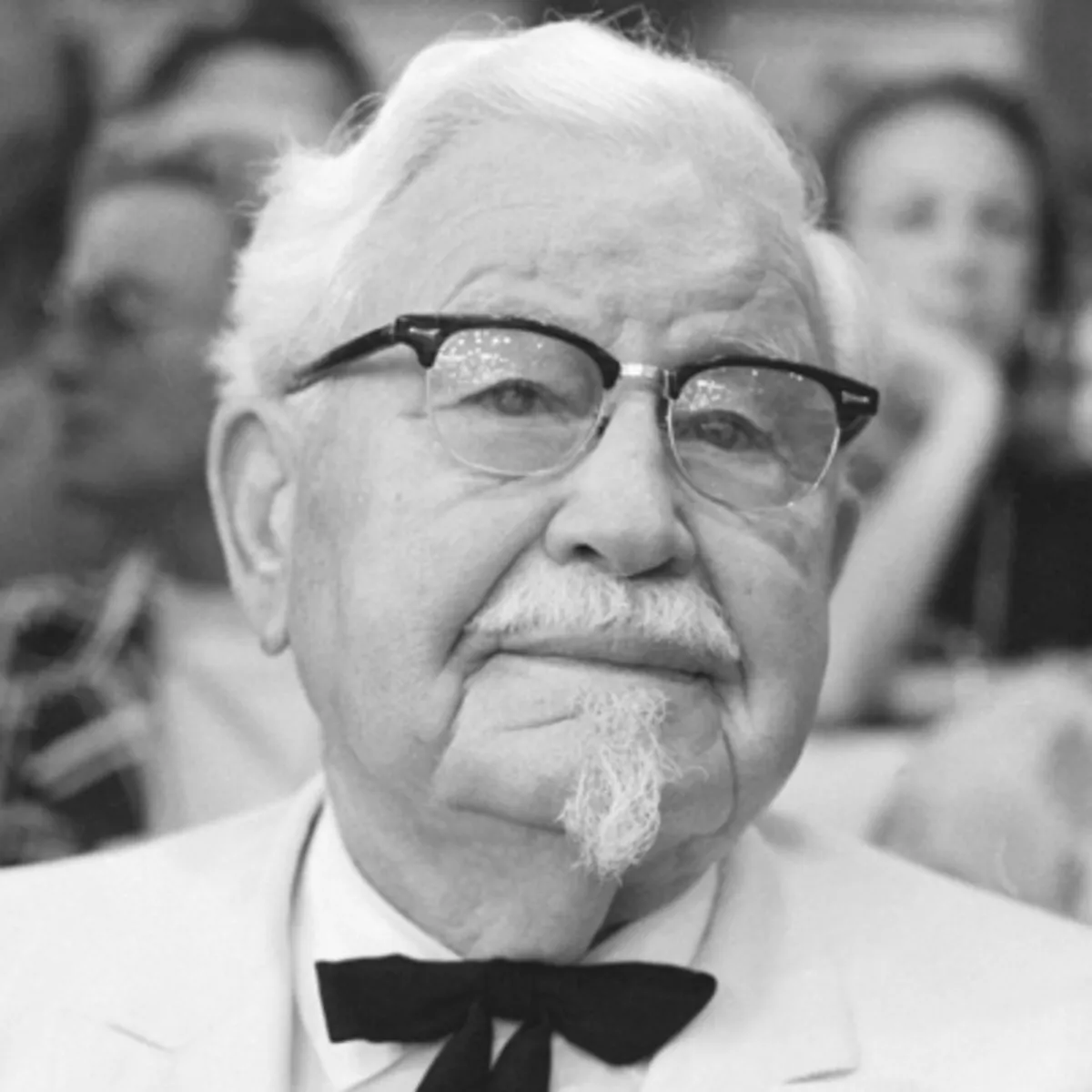 Photo: Colonel Sanders, via d26horl2n8pviu.cloudfront.net
Harland Sanders was 65 years old and living on Social Security when he decided to franchise his fried chicken recipe. He'd already failed at multiple businesses—running a service station, operating a ferry boat, practicing law without a degree (until he was caught), and managing a restaurant that went under when the interstate bypassed his town.
Everyone told him to accept retirement gracefully. His family worried about his mental state as he drove around the country with a pressure cooker in his back seat, trying to convince restaurant owners to buy his chicken recipe. After 1,009 rejections, even his closest friends begged him to give up this "foolish quest" and settle into a quiet retirement.
Sanders refused to quit. On his 1,010th attempt, a restaurant owner in Salt Lake City agreed to try his recipe. The chicken was a hit, and Kentucky Fried Chicken was born. Sanders had turned his biggest weakness—his inability to succeed at conventional businesses—into his greatest strength by creating something entirely new. His persistence in the face of universal rejection became the foundation of a global empire.
6. Lucille Ball: The Chorus Girl Who Couldn't Dance
What she was told to quit: Trying to make it in show business
Lucille Ball moved to New York City in 1926 with dreams of Broadway stardom, but she was a disaster as a performer. She couldn't sing well enough for musicals, couldn't dance well enough for chorus lines, and was considered too awkward for dramatic roles. Casting directors were brutal: "Go back to Ohio and find a nice husband," one told her. "You'll never make it in this business."
Ball's own drama school asked her to leave after determining she had no talent for performance. Talent agents refused to represent her. Even her family began hinting that perhaps it was time to come home and pursue a more realistic career. Everyone agreed: Lucy Ball was not cut out for entertainment.
Instead of quitting, Ball took any job she could get in the industry—modeling, bit parts, background roles. She studied other performers obsessively, learning to turn her natural awkwardness into comedic gold. Her willingness to look foolish, the very trait that made casting directors dismiss her, became the foundation of her comedy genius. "I Love Lucy" made her the most beloved entertainer of her generation and proved that sometimes the best performers are the ones who aren't naturally good at performing.
7. Frank Lloyd Wright: The Architect Who Built "Wrong"
What he was told to quit: Designing buildings that defied conventional architecture
Frank Lloyd Wright's early designs horrified established architects. His houses were too horizontal, too integrated with their landscapes, too different from accepted styles. Architecture schools used his work as examples of what not to do. The American Institute of Architects initially refused him membership, calling his designs "unbuildable fantasies."
Clients who hired Wright often tried to fire him mid-project when they saw his plans. His own mentor, Louis Sullivan, eventually told him to stick to more conventional designs if he wanted a successful career. Industry publications regularly mocked his "prairie style" as impractical and unmarketable.
Wright's response was to design even more radical buildings. His integration of architecture with natural landscapes, his emphasis on horizontal lines and open spaces, his rejection of ornate Victorian styles—all the things that made him seem like a terrible architect—eventually redefined what American architecture could be. Fallingwater, the Guggenheim Museum, and hundreds of other Wright buildings proved that the "wrong" way to build could actually be the right way to create spaces where people truly wanted to live and work.
The Pattern of Productive Rebellion
These seven Americans shared something beyond talent or luck—they shared the ability to recognize when conventional wisdom was wrong and the courage to bet their lives on that recognition. They understood that being told to quit often means you're onto something important, something that threatens the established way of doing things.
Their stories remind us that the most transformative innovations often come from people who refuse to accept that there's only one right way to do anything. Sometimes the best response to "you should quit" is "watch me prove you wrong."