The Silent Revolution: How Gestures Built an American Empire
The Factory Floor University
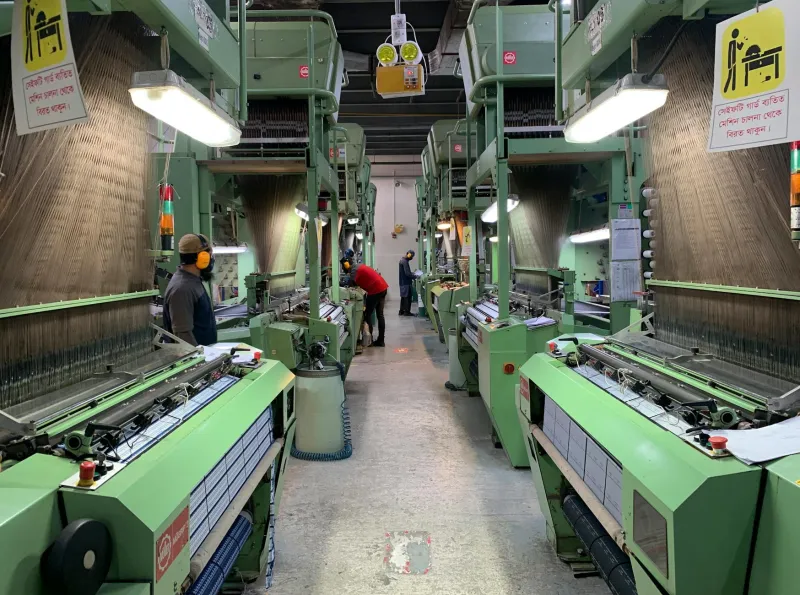
The Lowell textile mills in 1903 were loud, dangerous, and desperate for workers willing to accept the worst conditions. When Maria Gonzalez stepped off the train from Ellis Island with her cardboard suitcase and three English words—"hello," "yes," and "work"—she walked directly into the one job that seemed designed for someone who couldn't communicate: quality control inspector on the third shift.
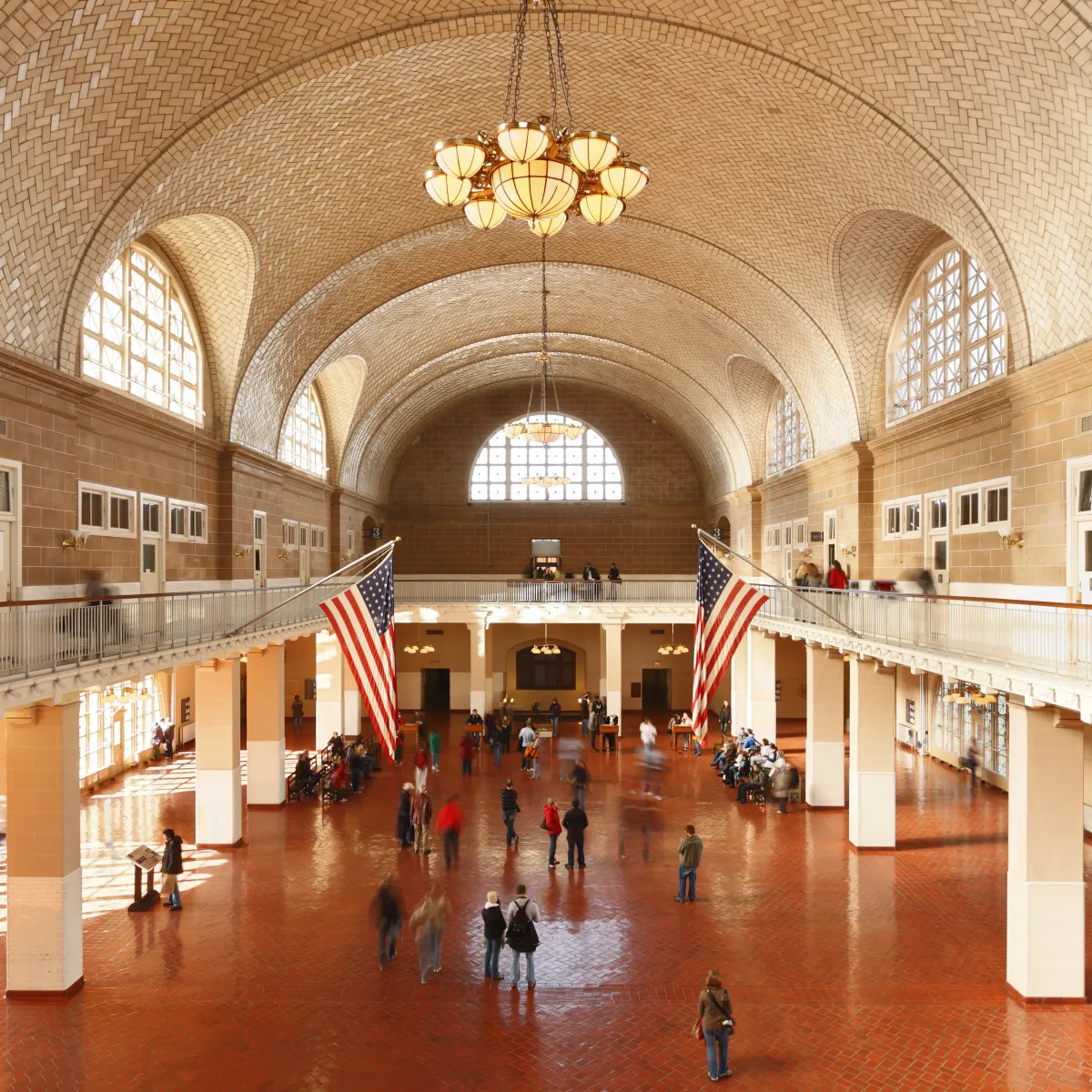 Photo: Ellis Island, via www.tripsavvy.com
The position had the highest turnover rate in the factory. Workers lasted an average of six weeks before quitting or being fired. The job required identifying defects in fabric patterns under dim gaslight, sorting damaged goods from salvageable ones, and somehow communicating problems to supervisors who spoke only English.
Most inspectors relied on shouting and pointing. Maria developed a different approach.
The Language of Observation
Unable to explain what she saw in words, Maria began drawing. Her first sketches were crude—circles around thread breaks, arrows pointing to color inconsistencies, simple diagrams showing how patterns went wrong. But within weeks, her drawings became more sophisticated, developing into a visual vocabulary that captured problems other inspectors missed entirely.
She noticed that certain defects clustered together in predictable ways. A loose thread in one section often meant tension problems three inches away. Color variations that looked random actually followed patterns related to humidity changes during the dyeing process. Thread breaks occurred more frequently when specific workers operated certain machines.
Maria's drawings began to map these invisible connections. Her sketches showed not just individual defects but the relationships between them—the hidden logic of how textiles failed.
The Supervisor Who Paid Attention
James Sullivan, the day shift supervisor, found Maria's drawings fascinating. While other inspectors flagged obvious problems, her sketches revealed systemic issues that affected entire production runs. She'd identified a pattern where fabric defects increased predictably every fourth day—a cycle that corresponded to the mill's cleaning schedule.
Sullivan couldn't speak Spanish, and Maria's English remained limited to workplace necessities. But they developed a collaborative relationship based on her drawings and his willingness to test her theories. When Maria sketched a diagram suggesting that adjusting loom tension differently for different humidity levels would reduce defects, Sullivan convinced the mill manager to try the experiment.
Defect rates dropped by 23% in the first month.
The Breakthrough Nobody Saw Coming
By 1905, Maria had been promoted to senior quality inspector, but her real innovation was still coming. She'd noticed something that would transform American textile production: the relationship between worker fatigue and specific types of errors.
Her drawings revealed that different workers made different mistakes when tired. Some lost focus on color matching. Others became careless with tension settings. The patterns were as individual as fingerprints, but they were predictable.
Maria developed a system for rotating workers between tasks based on their fatigue patterns, matching people to jobs when they were most likely to succeed. Her visual scheduling system—communicated entirely through diagrams and gestures—increased overall productivity by 31% while reducing workplace injuries by half.
The Patent That Changed Everything
In 1907, Sullivan helped Maria file for a patent on her "Method for Optimizing Textile Production Through Pattern Recognition and Worker Rotation." The patent application was unusual—instead of dense technical language, it consisted primarily of Maria's detailed drawings with minimal text.
The patent examiner initially rejected the application, arguing that diagrams couldn't adequately describe a manufacturing process. But when Sullivan submitted productivity data from mills using Maria's system compared to traditional methods, the evidence was overwhelming. The patent was approved in 1908, making Maria one of the first Latina women to hold a manufacturing patent in the United States.
The Expansion Beyond Lowell
News of Maria's system spread through textile industry networks. Mill owners from North Carolina to California requested consultations, eager to implement methods that could increase productivity without requiring expensive equipment upgrades.
Maria's lack of English actually became an advantage in these consulting relationships. Unable to rely on verbal explanations, she'd developed techniques for observing production processes that transcended language barriers. She could spend a day in any mill, regardless of the workers' native languages, and identify improvement opportunities through pure observation.
Her visual communication system was particularly valuable in mills employing diverse immigrant populations. Workers who couldn't understand each other's spoken languages could follow Maria's diagrammatic instructions for optimal task rotation and quality control.
The Institute That Grew From Sketches
By 1915, Maria had established the Gonzalez Institute for Industrial Efficiency in Boston—the first consulting firm focused specifically on manufacturing optimization through worker-pattern analysis. Her methods were being used in over 200 factories across the United States, from textiles to steel production.
 Photo: Gonzalez Institute for Industrial Efficiency, via effdev.com
The Institute employed a team of multilingual observers who used Maria's visual documentation techniques to analyze production processes. They could identify inefficiencies in any manufacturing environment, regardless of language barriers, by focusing on patterns rather than verbal communication.
Maria's influence extended beyond individual factories. Her emphasis on matching workers to tasks based on individual strengths and fatigue patterns became a foundational principle of industrial psychology, decades before the field had a formal name.
The Recognition That Came Later
Despite her innovations, Maria received little public recognition during her lifetime. Business publications credited mill owners and supervisors with implementing "modern efficiency methods" without mentioning the immigrant woman who developed them. Academic papers discussing industrial optimization rarely cited her patents or acknowledged her contributions.
This invisibility was partly due to language barriers—Maria never became comfortable giving interviews in English—but also reflected broader patterns of how immigrant innovations were overlooked by mainstream business media.
It wasn't until the 1960s that industrial historians began recognizing Maria's role in developing what would later be called "human factors engineering" and "ergonomic job design." Her visual documentation methods became standard practice in manufacturing consulting, though few practitioners knew their origins.
The Legacy Written in Diagrams
Maria Gonzalez died in 1943, having transformed American manufacturing through methods that required no shared language beyond careful observation and clear visual communication. Her techniques for matching workers to tasks, identifying systemic production problems, and optimizing factory efficiency became foundational elements of modern industrial management.
Her story challenges assumptions about innovation and communication. While her contemporaries focused on verbal persuasion and technical jargon, Maria proved that the most powerful ideas often transcend language entirely. Her drawings spoke to universal patterns in how people work, how machines behave, and how systems fail.
The factories that adopted her methods didn't just become more efficient—they became more humane, recognizing individual workers' strengths and limitations rather than treating them as interchangeable parts. In an era when industrial management was becoming increasingly mechanized and impersonal, Maria's approach emphasized the human element that makes all systems work.
Today's manufacturing consultants use sophisticated software to analyze production patterns and optimize worker assignments. But they're essentially doing what Maria Gonzalez figured out over a century ago with nothing but careful observation, paper, and pencil: recognizing that the key to industrial efficiency isn't better machines or faster processes, but understanding the intricate patterns of how people and systems interact.
Her legacy lives on in every factory floor where supervisors pay attention to worker fatigue patterns, every quality control system that tracks defects systematically, and every workplace that recognizes that innovation can come from the most unlikely sources—even from someone who communicates primarily through sketches and gestures.