When Honeybees Led to the Building Blocks of Life: The Teacher Who Cracked Biology's Greatest Code
The Laundry Room Scientist
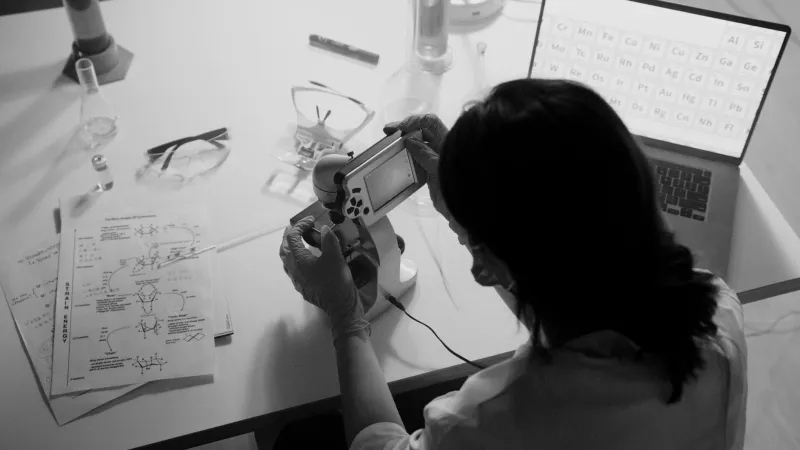
In 1905, while most women her age were tending gardens or raising grandchildren, Nettie Stevens was hunched over a microscope in a cramped laboratory at Bryn Mawr College, staring at the reproductive cells of fruit flies. At 44, she was ancient by graduate student standards, funding her own research with money earned from years of teaching and doing laundry. Her colleagues barely knew her name. But Stevens was about to crack a mystery that had puzzled scientists for centuries: what determines whether a baby is born male or female?
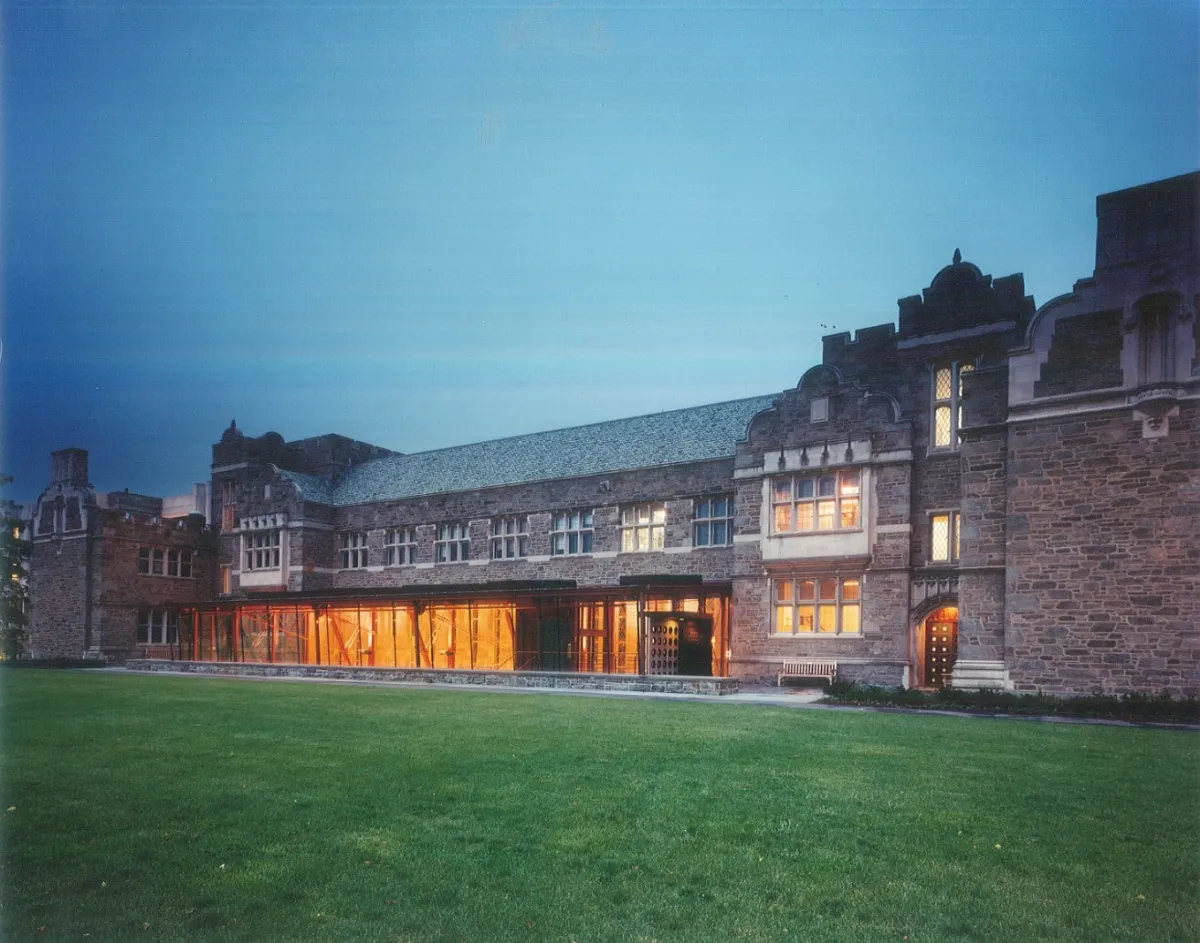 Photo: Bryn Mawr College, via static.wixstatic.com
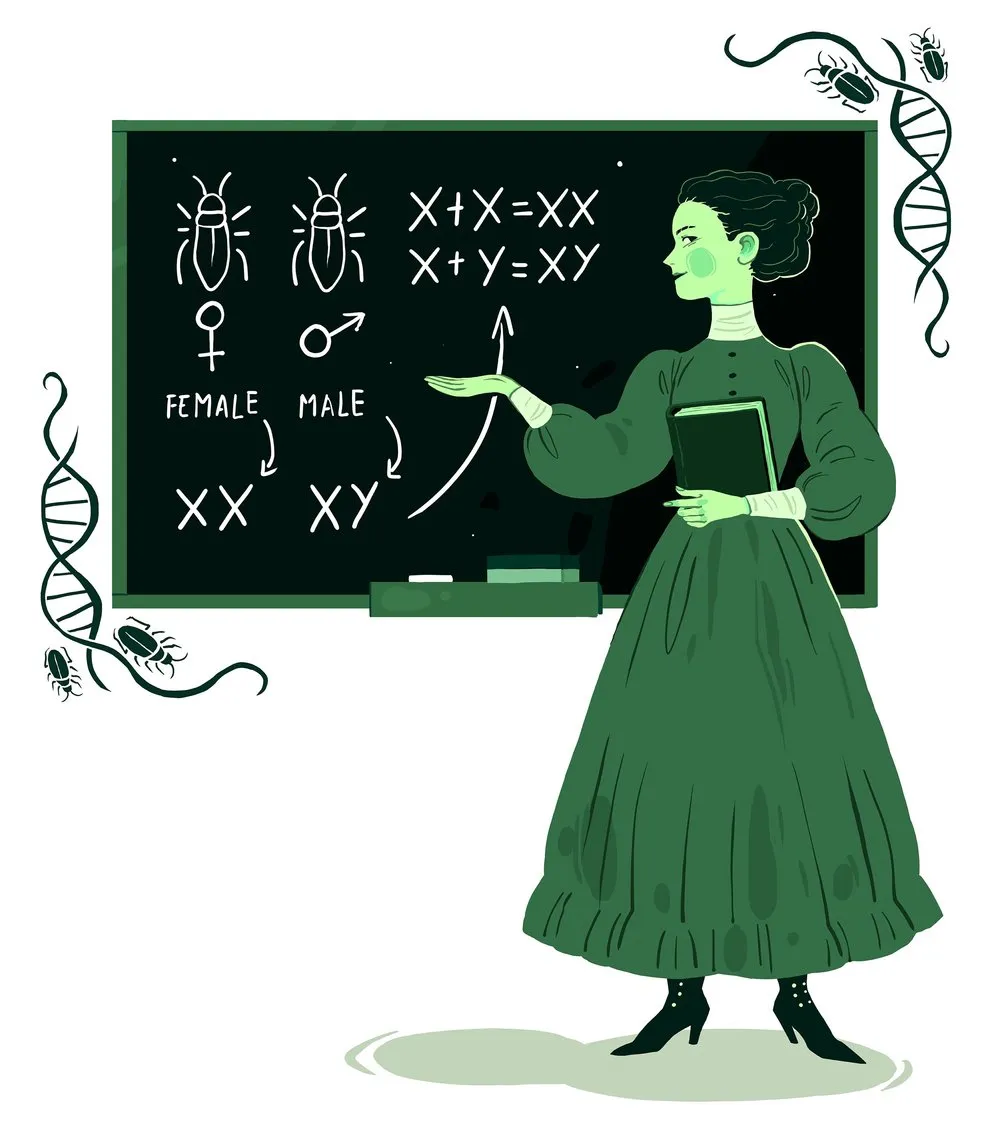 Photo: Nettie Stevens, via images.squarespace-cdn.com
The answer would reshape how humanity understood life itself.
Stevens didn't start as a scientist. Born in 1861 in rural Vermont, she was the daughter of a carpenter and grew up helping her family keep bees. The meticulous observation required to manage hives — watching for patterns, noting subtle changes, understanding complex behaviors — would prove surprisingly useful decades later when she turned that same attention to microscopic chromosomes.
From Schoolhouse to Laboratory
After finishing high school, Stevens did what most bright young women of her era did: she became a teacher. For thirteen years, she taught in small Vermont schools, saving every penny she could. But Stevens had bigger plans. At 35, an age when most people had settled into their life's work, she enrolled at Stanford University to study biology.
 Photo: Stanford University, via architectplanning.stanford.edu
It was an audacious move. Graduate programs rarely accepted women, and those that did often treated them as curiosities rather than serious scholars. Stevens didn't care. She had discovered something that fascinated her more than anything else: the mysterious world visible only through a microscope.
At Stanford, Stevens threw herself into her studies with the intensity of someone making up for lost time. She graduated with honors in just three years, then made another bold decision: she would pursue a PhD at Bryn Mawr, one of the few institutions where women could conduct serious research.
The Mystery That Consumed Her
By 1900, scientists knew that traits passed from parents to children through something called chromosomes — tiny structures visible inside cells. But one of biology's biggest questions remained unanswered: what determined sex? Some researchers thought it was environmental factors like temperature or nutrition. Others believed it was purely random.
Stevens had a different theory. Working with fruit flies and beetles, she spent months preparing microscopic slides, staining cells, and counting chromosomes under her microscope. The work was painstaking — one mistake could ruin weeks of preparation.
What she discovered changed everything.
The Moment That Rewrote Biology
In male insects, Stevens found something extraordinary: they had two different types of sex chromosomes, which she labeled X and Y. Females had two identical X chromosomes. It was the male's contribution that determined the offspring's sex — the X chromosome produced females, the Y chromosome produced males.
This wasn't just a discovery about insects. Stevens had uncovered a fundamental mechanism of life that applied to virtually all mammals, including humans. Sex wasn't determined by chance or environment — it was written into our chromosomes from the moment of conception.
The scientific establishment was stunned. Here was a middle-aged woman who had spent years washing clothes and teaching children, working in near-total obscurity, who had solved one of biology's greatest puzzles.
Recognition That Came Too Late
Stevens published her findings in 1905, but recognition came slowly. The scientific community was dominated by men who found it difficult to accept that such a fundamental discovery had been made by a woman who hadn't even started her scientific career until her thirties.
Meanwhile, a male colleague at Columbia University, Edmund Wilson, was conducting similar research. Though Stevens had published first and her work was more comprehensive, Wilson often received equal or greater credit for the discovery. It was a pattern that would follow Stevens throughout her career.
She continued her research for another decade, making additional contributions to our understanding of chromosomes and heredity. But Stevens never lived to see her work receive the recognition it deserved. She died of breast cancer in 1912, just seven years after her groundbreaking discovery.
The Legacy Hidden in Plain Sight
Today, every high school biology student learns about X and Y chromosomes, but few know the name Nettie Stevens. Her discovery laid the foundation for modern genetics, influencing everything from medical research to evolutionary biology. The chromosomal basis of sex determination that she uncovered became a cornerstone of 20th-century science.
Stevens proved that extraordinary discoveries don't always come from prestigious laboratories or famous researchers. Sometimes they come from a beekeeper's daughter who spent her youth teaching school and washing clothes, who didn't pick up a microscope until her thirties, and who paid her own way through graduate school with a determination that would make her one of biology's most important pioneers.
In an age when women were told their brains weren't suited for scientific thinking, Nettie Stevens quietly rewrote the rules of life itself. She may have started late, but she finished with a discovery that will outlast us all.