Dirty Plates, Clean Innovation: How a Night Shift Dishwasher Quietly Built the Modern American Kitchen
The View from the Bottom
Every night for fifteen years, Angelo Bertolini stood in the same spot in the basement kitchen of the Waldorf Hotel, watching an endless parade of dirty dishes flow past him like a greasy river. It was 1923, and the Italian immigrant had been washing dishes since he arrived in New York with nothing but calloused hands and a willingness to work the shifts nobody else wanted.
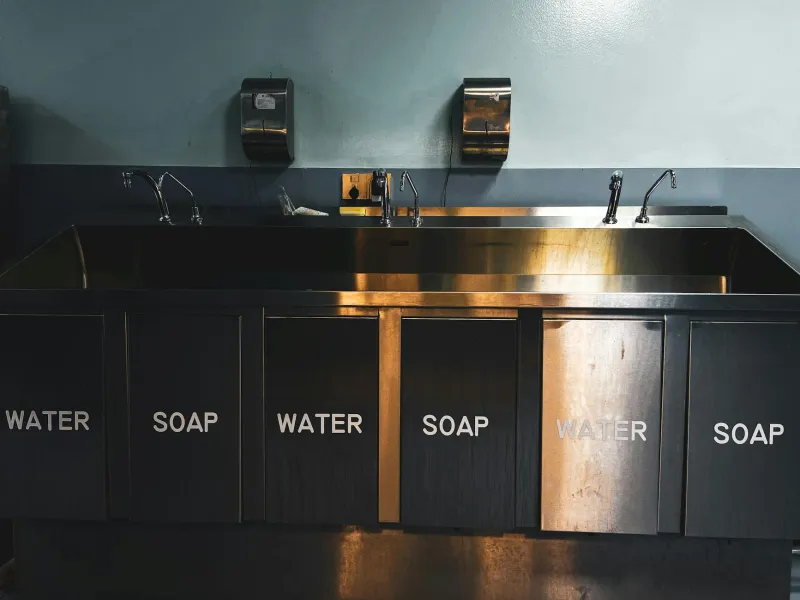
What Angelo saw from his station wasn't glamorous. But it was comprehensive. He watched cooks fumble with poorly placed burners. He saw waiters struggle with cabinet doors that opened the wrong way. He noticed how the dish pit backed up because the sink was six inches too low and the drain was in the wrong corner.
Most people would have just washed the dishes and gone home. Angelo started taking notes.
The Problem Nobody Else Could See
The hotel's head chef was a classically trained Frenchman who had worked in the finest kitchens of Paris. The kitchen designer was a prestigious architect who had studied at Columbia. But neither of them had spent a single hour doing the actual work that happened in their carefully planned space.
Angelo had spent 50,000 hours.
He knew that the spice rack was positioned exactly where steam from the main burner would ruin half the seasonings by dinner service. He knew that the prep tables were three inches too high for anyone under six feet tall, which meant most of the kitchen staff worked with sore backs. He knew that the dish return system created a bottleneck that slowed down the entire operation during rush periods.
Most importantly, he knew that the people designing kitchens had never actually worked in them.
Sketches in Steam
Angelo started sketching his ideas on the backs of order slips during his breaks. His English wasn't perfect, but his understanding of kitchen flow was flawless. He drew cabinet systems that opened away from work areas instead of into them. He designed prep stations with built-in waste disposal that would keep scraps moving instead of piling up. He imagined sink configurations that would let one person do the work of two.
The hotel management wasn't interested. When Angelo showed his sketches to the head chef, the Frenchman barely glanced at them before dismissing the ideas as the fantasies of an uneducated laborer.
So Angelo decided to build his ideas himself.
The Workshop in His Tenement
In the cramped apartment he shared with his wife and three children on the Lower East Side, Angelo set up a workshop in what should have been their dining room. Using scrap metal from construction sites and wood from packing crates, he started building prototypes of his kitchen innovations.
 Photo: Lower East Side, via theagencyre.com
His wife Maria thought he had lost his mind. Their neighbors complained about the noise. But Angelo kept working, refining his designs based on the problems he saw every night at the hotel.
He built a dish drying rack that could be folded flat against the wall when not in use. He designed a spice storage system that protected seasonings from heat and moisture. He created a prep table with an integrated cutting board that could be removed for cleaning but never got in the way.
Each piece solved a problem that only someone who had done the actual work would have noticed.
The Breakthrough Nobody Saw Coming
In 1928, Angelo finally saved enough money to quit his dishwashing job and open a small shop in Brooklyn. He called it "Practical Kitchen Solutions," and his first customers were other restaurant workers who had heard about his innovations through word of mouth.
The breakthrough came when a young architect named Margaret Thompson stumbled into his shop while looking for hardware for a client's kitchen renovation. Thompson was one of the few designers who actually talked to the people who would use the spaces she created. When she saw Angelo's work, she immediately understood what she was looking at.
Angelo's designs weren't just clever—they were based on real experience. Thompson began incorporating his ideas into her residential projects, and suddenly, middle-class American families had kitchens that actually worked the way people cooked.
The Revolution Nobody Noticed
By 1935, Angelo's designs had been copied, adapted, and mass-produced by major manufacturers across the country. The pull-out spice rack became standard in American kitchens. His sink configuration was adopted by Sears for their mail-order home plans. His cabinet door design became the industry norm.
Angelo never became famous. Most Americans who used his innovations never knew his name. But walk into almost any American kitchen today, and you'll see his influence everywhere. The way your cabinets open, the height of your counters, the placement of your sink—all of it traces back to insights that came from fifteen years of washing dishes.
The Lesson in the Dishwater
Angelo Bertolini's story reveals something important about innovation: proximity to a problem matters more than prestige. The people who actually do the work often understand it better than the people who design it. The dishwasher sees inefficiencies that the chef misses. The night shift worker notices problems that the day manager never encounters.
Angelo's genius wasn't that he was smarter than the architects and designers of his era. It was that he was closer to the actual work. He understood kitchen inefficiency because he lived with it every day. His innovations worked because they solved real problems experienced by real people.
In a world that often mistakes credentials for insight, Angelo Bertolini proved that the best solutions sometimes come from the most unlikely sources. All you need is the willingness to pay attention to the problems right in front of you—and the persistence to do something about them.