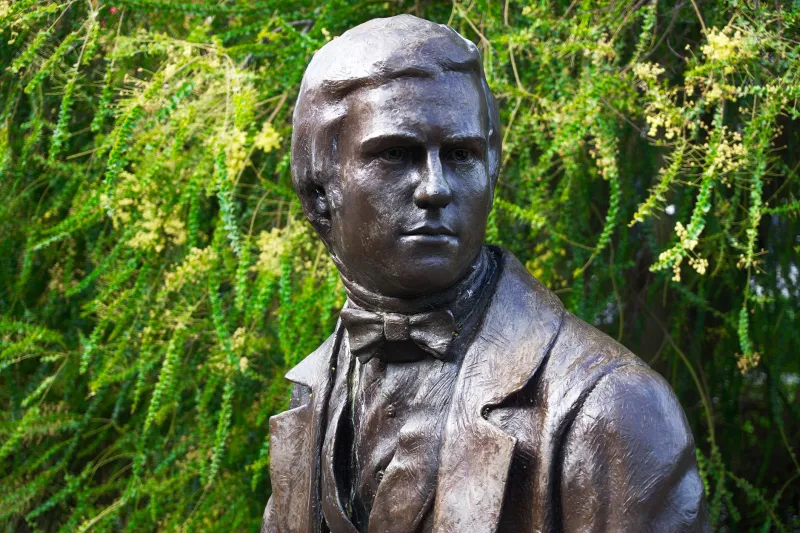
The Boy Who Mapped America One Message at a Time
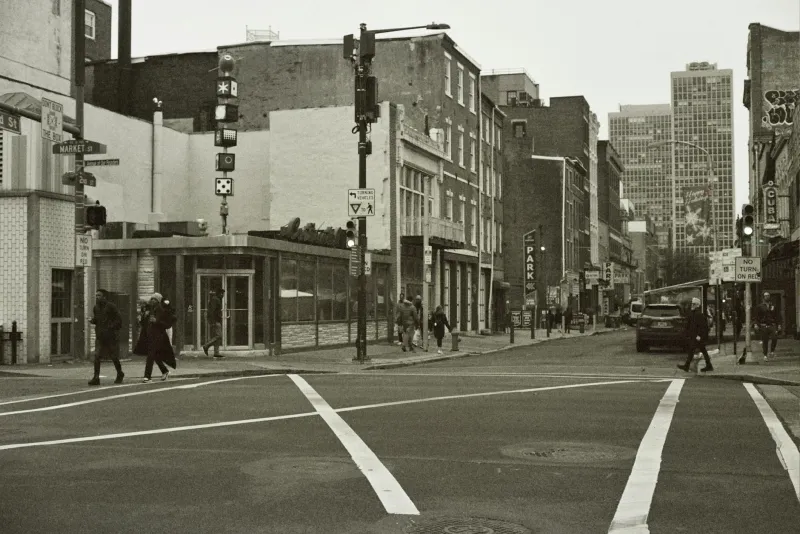
The Fourteen-Year-Old Cartographer
Samuel Jepson's first day as a telegram messenger in Philadelphia should have been unremarkable. The year was 1884, his family needed every penny he could earn, and Western Union needed boys who could run fast through the crowded streets. But Samuel possessed something that would prove far more valuable than speed: an inability to stop paying attention.
While other messenger boys focused on getting from point A to point B as quickly as possible, Samuel found himself fascinated by the patterns hidden in plain sight. Why did messages to certain neighborhoods always take longer? Which routes consistently caused delays? Why did some telegraph lines seem to work better than others?
The Notebook Habit
What started as idle curiosity soon became an obsession. Samuel began carrying a small notebook, jotting down observations during his brief rest periods between deliveries. He recorded which streets had the most reliable telegraph poles, which offices received the heaviest message traffic, and which routes experienced consistent bottlenecks.
His supervisors noticed that Samuel rarely got lost and never seemed confused about addresses, but they had no idea he was essentially creating the first comprehensive map of Philadelphia's communication infrastructure. Every dead end, every shortcut, every inefficient routing decision was carefully documented in his increasingly thick collection of notebooks.
The Accidental Expert
By 1890, Samuel had been promoted several times, but he never stopped taking notes. His territory had expanded beyond Philadelphia to cover parts of Pennsylvania, New Jersey, and Delaware. His notebooks now contained what amounted to the most detailed analysis of East Coast communication patterns that anyone had ever compiled.
He knew which telegraph offices were overwhelmed during business hours, which lines failed most frequently during storms, and which routes could handle increased traffic. More importantly, he understood the human patterns behind the technology—when people sent messages, where they sent them, and how communication flowed through America's growing cities.
The Underground Influence
Samuel never published his findings or sought recognition for his work. But word of his unusual expertise began to spread through the tight-knit community of telegraph operators and communications engineers. When Western Union needed to plan new routes, someone would inevitably suggest "asking that Jepson fellow what he thinks."
His handwritten recommendations began appearing in official planning documents, usually without attribution. When the Pennsylvania Railroad was planning their telegraph network expansion, they quietly consulted Samuel's notes about traffic patterns and line reliability. When Bell Telephone was designing their early switching systems, they referenced his observations about how messages moved through urban areas.
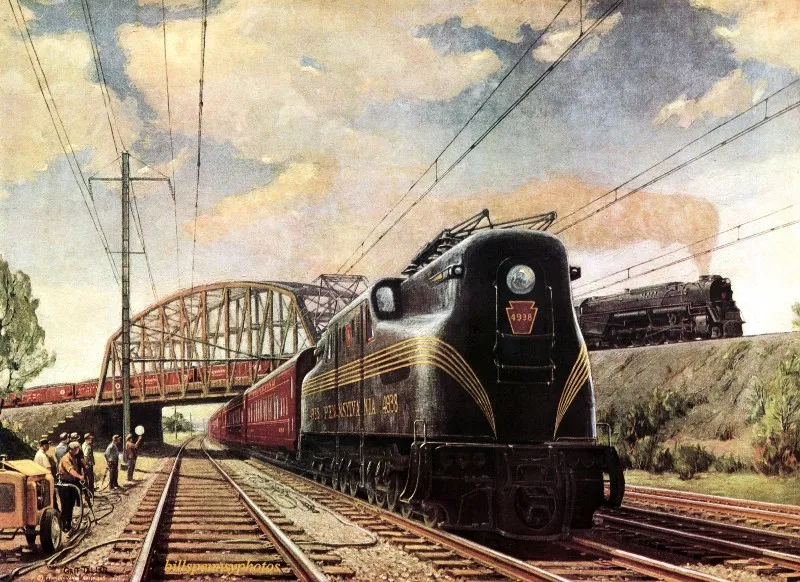 Photo: Pennsylvania Railroad, via railfantravel.com
The Network Prophet
By 1900, Samuel had become an unofficial consultant to three major communications companies, though he still officially worked as a senior messenger supervisor. His notebooks had evolved into sophisticated routing diagrams and efficiency analyses that would have impressed modern systems engineers.
He had identified the fundamental principles that would later govern telephone networks, radio broadcasting systems, and eventually the internet itself: the importance of redundancy, the mathematics of network congestion, and the human behaviors that drive communication patterns.
The Invisible Revolution
When Samuel finally retired in 1920, he left behind forty years of meticulously documented observations about how information moved across America. His notebooks were quietly archived by AT&T's engineering department, where they influenced the design of the nation's telephone infrastructure for decades.
The coast-to-coast calling system that debuted in 1915 incorporated routing principles that Samuel had identified thirty years earlier while running messages through Philadelphia's streets. The switching technologies that made nationwide telephone service possible were based, in part, on his observations about how to manage communication bottlenecks efficiently.
The Messenger's Legacy
Samuel Jepson died in 1932, never knowing that his boyhood habit of taking notes had helped shape America's communication revolution. The principles he discovered while trying to be a better telegram messenger became the foundation for systems that connected a continent.
His story illustrates something profound about how innovation actually happens. The people who transform entire industries are often those who spend years in the trenches, paying attention to details that everyone else takes for granted. Samuel saw patterns because he was forced to live inside them every single day.
The View from the Bottom
There's something almost magical about Samuel's story—how the humblest job in the communication industry provided the clearest view of how the whole system actually worked. While executives and engineers theorized about network design, a teenage messenger was documenting the reality of how information actually moved through America's cities.
His notebooks remind us that the most valuable insights often come from the people closest to the ground, the ones who see every inefficiency, every workaround, every human behavior that shapes how systems really function. Sometimes the best view of the forest comes from someone who spends their time walking between every single tree.
Samuel Jepson never set out to revolutionize American communications. He just wanted to do his job well and help his family survive. But his relentless curiosity and careful attention to detail accidentally created a roadmap for connecting a continent.