The Deaf Telephone Operator Who Rewired American Communication

The Job She Wasn't Supposed to Keep
In 1923, Helen Morrison faced what seemed like the end of her career. After three years as one of Chicago's most efficient telephone operators, a bout of scarlet fever left her completely deaf. The Bell Telephone Company's policy was clear: operators who couldn't hear couldn't work. But Morrison had bills to pay and no other skills, so she made a desperate proposal to her supervisor: give her one week to prove she could still do the job.
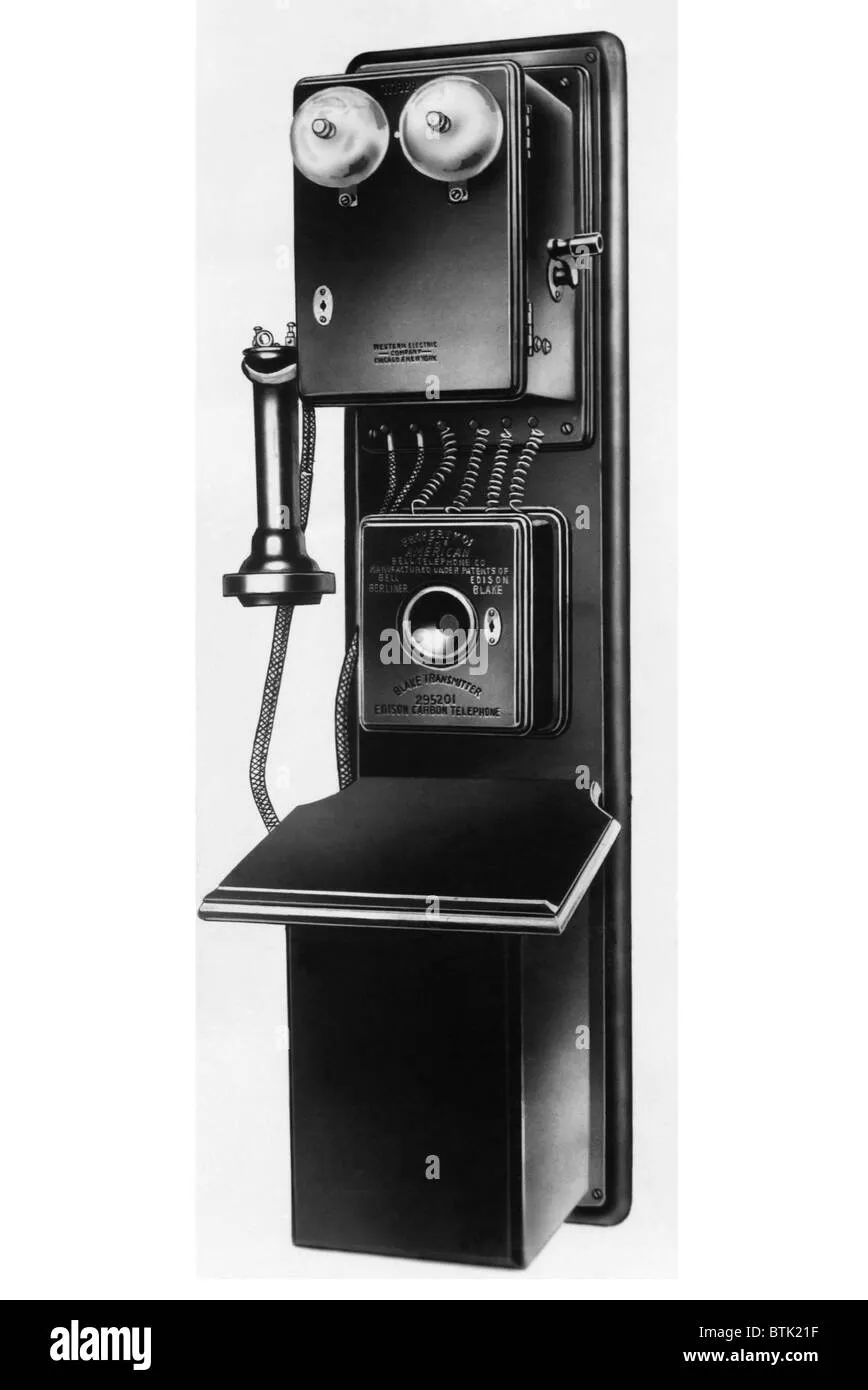 Photo: Bell Telephone Company, via c8.alamy.com
What happened next would quietly transform American telecommunications in ways that engineers and executives never anticipated. Morrison's week-long trial became a thirty-year career that revolutionized how phone networks operated across the United States.
Seeing What Others Only Heard
Without the ability to rely on sound, Morrison was forced to develop an entirely new approach to managing telephone connections. While other operators listened for audio cues—the quality of a connection, background interference, or the subtle clicks that indicated technical problems—Morrison learned to read the network through visual and tactile signals that her hearing colleagues never noticed.
She discovered that the mechanical switching equipment produced distinct vibration patterns for different types of calls. Long-distance connections had a different feel from local ones. Problem lines created specific visual indicators on the switchboard that operators typically ignored because they could hear the issues instead. Morrison couldn't hear anything, so she learned to see everything.
Within her first month back on the job, Morrison was identifying network problems faster than operators who relied on audio cues. She could spot overloaded circuits, detect equipment malfunctions, and route calls more efficiently than anyone else in the Chicago exchange.
The System That Worked Too Well
Morrison's innovations began small. She started making tiny marks on her switchboard to track patterns she was noticing—certain times when specific lines were more likely to fail, routes that worked better for long-distance calls, equipment that needed attention before it completely broke down. Her supervisor initially dismissed these modifications as the quirky adaptations of a disabled employee trying to keep up.
But Morrison wasn't just keeping up—she was setting records. Her call completion rates were consistently higher than any other operator in the building. Her connections were cleaner, faster, and more reliable. Customers began specifically requesting to be routed through "the quiet operator" because their calls always went through perfectly.
The breakthrough came when Morrison developed what she called her "signal system"—a series of visual indicators and hand signals that allowed her to communicate complex technical information to other operators without speaking. The system was so efficient that hearing operators began adopting it, even though they didn't need it.
The Innovation That Spread Everywhere
By 1925, Morrison's visual signaling system was being studied by Bell engineers who couldn't understand why the Chicago exchange was outperforming every other facility in the Midwest. When they discovered that the innovations were coming from a deaf operator, their first instinct was to dismiss the findings. Surely there had to be a technical explanation that didn't involve someone with a disability teaching the telephone company how to do its job better.
But the numbers were undeniable. Morrison's techniques were reducing connection times by an average of 15 seconds per call and cutting technical failures by nearly 30%. In a business where efficiency was measured in fractions of seconds and reliability meant the difference between profit and loss, those improvements were revolutionary.
Bell began quietly implementing Morrison's visual signaling protocols in exchanges across the country. The company never publicized the source of the innovations—having a deaf employee outperform their entire engineering department wasn't the kind of story they wanted to tell. But by 1930, Morrison's system was standard practice in telephone exchanges from New York to San Francisco.
The Irony of Perfect Communication
The most remarkable aspect of Morrison's story is how her inability to hear led to breakthroughs in communication technology. While engineers focused on improving audio quality and call clarity, Morrison was developing ways to make the entire system work better by eliminating the need to rely on sound at all.
Her visual indicators became the foundation for the automated switching systems that would eventually replace human operators entirely. The patterns she identified through vibration and visual cues were the same patterns that engineers would later program into electronic systems. Morrison was essentially developing the logic for automated telecommunications decades before the technology existed to implement it.
Customers who were routed through Morrison's station consistently reported the clearest, most reliable connections they'd ever experienced. The irony was perfect: the deaf operator was providing better communication than anyone who could hear.
Beyond the Switchboard
Morrison's influence extended far beyond her own work station. The operators she trained using her visual system became supervisors and trainers themselves, spreading her techniques throughout the Bell network. By the 1940s, telephone training programs across the country were teaching modified versions of Morrison's methods to all new operators, regardless of their hearing ability.
The efficiency gains were so significant that other telecommunications companies began trying to reverse-engineer Bell's apparent technical advantages. None of them suspected that the innovations they were struggling to replicate had originated with a single deaf operator in Chicago who had simply found a different way to do her job.
Morrison herself remained largely anonymous throughout her career. Bell never promoted her story, and she preferred to work quietly rather than draw attention to her disability. But her innovations generated millions of dollars in efficiency gains and improved the reliability of American telecommunications infrastructure in ways that lasted well into the digital age.
The Legacy of Limitation
When Morrison retired in 1953, the telecommunications industry was on the verge of the automation revolution that would eliminate most operator positions. But the visual systems and efficiency protocols she had developed became integral parts of the electronic switching technology that replaced human operators.
Modern telecommunications networks still use descendants of Morrison's visual monitoring systems. The real-time diagnostic displays that technicians use to manage today's digital networks trace their conceptual origins back to the makeshift visual indicators that a deaf operator created to do her job better.
Morrison's story challenges our assumptions about disability, innovation, and expertise. Her hearing loss wasn't overcome through technological aids or special accommodations—it was transformed into a competitive advantage that revolutionized an entire industry. She succeeded not despite her limitation, but because of it.
In a field where everyone else was listening, Helen Morrison learned to see. And in seeing differently, she helped America communicate better than ever before. Her legacy lives on in every clear connection, every reliable network, and every innovation that emerged from the simple recognition that sometimes the best solutions come from people who are forced to find completely different ways of solving familiar problems.