They Locked Her Away for Talking to Herself. She Was Writing a Masterpiece.
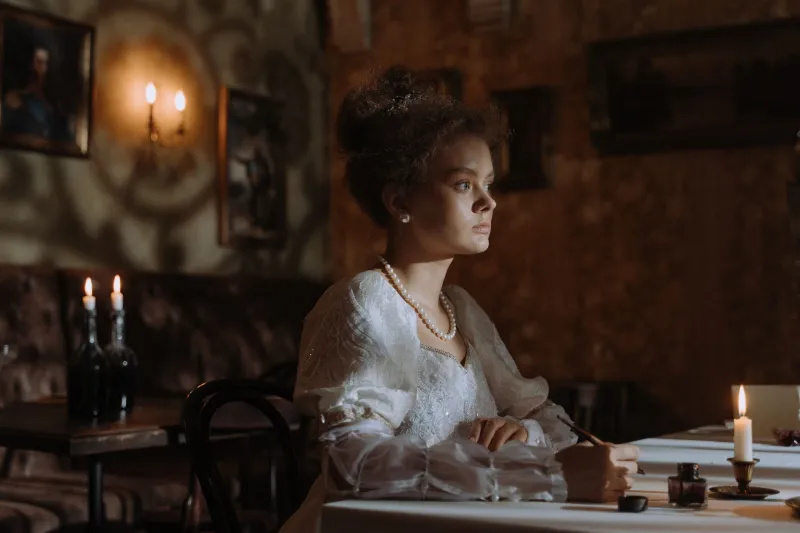
The year was 1874. The woman's name, in the records of the institution where she was committed, was listed simply as "Mrs. A. Hartwell, age 34, Zanesville, Ohio." Under the column marked presenting condition, a physician had written three words: incoherent verbal repetition.
 Photo: Zanesville, Ohio, via www.downtownzanesville.com
She was not incoherent. She was composing.
The Habit That Frightened Everyone
Agnes Hartwell had been muttering to herself for as long as anyone in her family could remember. Not anxiously, not randomly — rhythmically. She moved her lips in patterns that had a kind of internal music to them, pausing, backing up, starting a phrase again slightly differently, the way a person searches for exactly the right word.
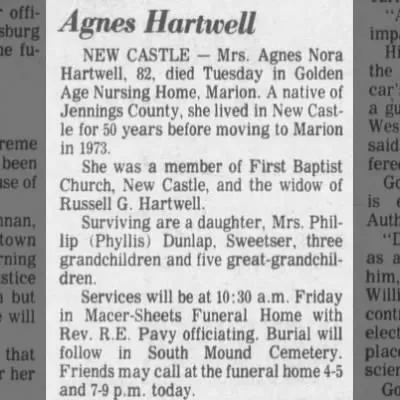 Photo: Agnes Hartwell, via img.newspapers.com
To her husband, to her mother-in-law, to the physician they eventually called, this behavior was alarming. Women in 1874 were not supposed to do unexplainable things with their mouths. They were not supposed to be somewhere else in their heads while the rest of the household carried on around them. The medical vocabulary of the era offered a ready diagnosis for a woman who seemed to inhabit a world that others couldn't see or hear.
She was committed to the Ohio State Asylum for the Insane in Columbus. She was thirty-four years old. She left behind three children, a husband who believed he was doing the right thing, and — because she had never written any of it down — an entire body of work that existed only inside her head.
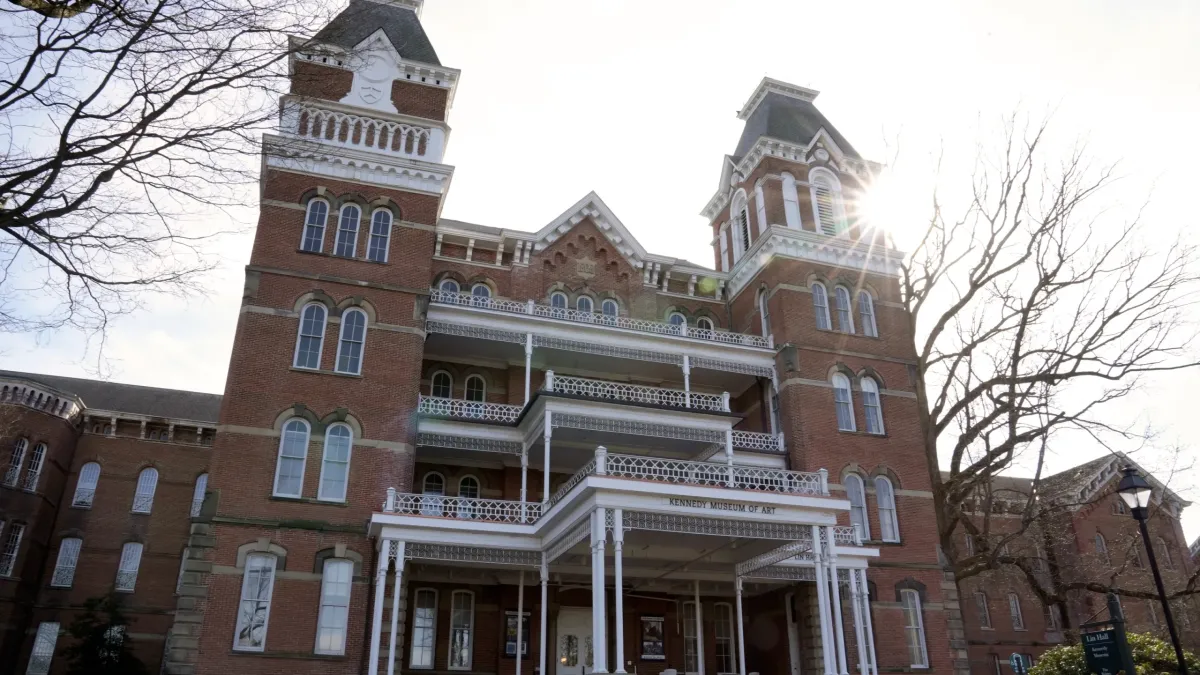 Photo: Ohio State Asylum for the Insane, via southeastohiohistory.org
Six Years in a Ward
The records from Hartwell's time at the asylum are sparse, as records from such places tend to be. What survives suggests she was considered a quiet patient — not disruptive, not visibly distressed, simply unreachable. She continued to mutter. Staff noted it without curiosity. The institution was crowded, understaffed, and oriented toward management rather than understanding.
For six years, she sat in the same ward, moving her lips in the same rhythmic patterns, composing in a medium that left no physical trace.
The woman who changed everything was a nurse named Harriet Colwell, who came to work at the asylum in 1879. Colwell was unusual for her era in several respects — she had some formal education, she had read widely, and she was constitutionally incapable of accepting the standard explanation for anything without poking at it first.
She noticed Hartwell. Not the muttering — everyone had noticed the muttering. She noticed that the muttering had structure. That it stopped and started with the deliberateness of someone making decisions. That Hartwell's face, while she did it, looked not confused but concentrated.
Colwell began sitting with her. Listening. After several weeks, she asked Hartwell directly what she was doing.
Hartwell looked at her for a long moment and then, quietly, recited a complete poem from the beginning.
What Colwell Heard
The poem — one of what turned out to be dozens Hartwell had been composing and memorizing over six years — was, by any measure, extraordinary. It wasn't the sentimental verse that dominated women's publishing in the 1870s. It was precise and strange and structurally unconventional, with a compression that felt almost modern. It dealt with grief and confinement and the particular experience of being a woman whose interior life was invisible to everyone around her.
Colwell wrote it down. Then she asked for another. And another.
Over the following months, working in whatever quiet moments the ward allowed, Colwell transcribed more than forty poems from Hartwell's memory. She also began advocating, carefully and persistently, for Hartwell's release — arguing to physicians who were skeptical that a woman capable of this level of sustained, structured creative work was not suffering from the disorder she had been diagnosed with.
In 1880, Agnes Hartwell was released. She was forty years old. She went home to a household that had reorganized itself around her absence and a husband who was not entirely sure what to do with her return.
The Long, Quiet Circulation
Hartwell did not become famous. Not then, and not for a very long time.
What she did, in the years after her release, was write. She had spent six years training her memory to hold entire poems without paper. Now she had paper, and she filled it. She also, quietly and without much fanfare, began sharing her work with other women — through the informal literary circles that existed on the margins of respectable social life in small Ohio towns, through correspondence, through the kind of hand-to-hand sharing that leaves almost no historical record.
For decades, her work moved through women's networks this way. Copied by hand. Passed along. Read aloud at gatherings that didn't make the newspapers. Admired by women who had no way to get it in front of anyone with publishing power and, in many cases, no particular expectation that they ever would.
The women who kept her work circulating understood something about it that the broader literary world wasn't yet ready to hear. They held onto it anyway.
The Chicago Editor
In 1921, a Chicago editor named Margaret Forsythe was putting together an anthology of American women's poetry for a small independent press. She had been collecting work for two years, casting a wide net into exactly the kinds of informal networks where Hartwell's poems had been living for four decades.
A handwritten copy of seven Hartwell poems reached her through a chain of women so long that Forsythe initially couldn't trace it back to its source. When she finally found Agnes Hartwell — through correspondence that took several months — she discovered she was writing to an eighty-one-year-old woman living in a small house outside Columbus, still writing, still sharp, apparently unsurprised that someone had finally come looking.
The anthology was published in 1922. Hartwell's section ran to nineteen poems. The introduction Forsythe wrote for it described her as "among the most original voices in American poetry, working in a tradition entirely of her own making."
Hartwell died two years later, at eighty-three. By then, a small number of literary women knew her name. The broader world did not.
What Gets Lost
Hartwell's story is not, in the end, a story about triumph over adversity in any clean or satisfying sense. Six years of her life were taken from her based on a misunderstanding that was also a failure of imagination — an inability to conceive that a woman muttering to herself might be doing something valuable rather than something wrong.
What makes it remarkable is what survived anyway. Not because of any institution, not because of any official recognition, but because a series of women — a nurse, a chain of literary circle members, an editor — refused to let it disappear. They passed it forward through networks that history mostly doesn't record, preserving a voice that had been declared incoherent by people who simply weren't listening carefully enough.
The poems exist. Some of them are extraordinary. They were composed in a locked ward by a woman whose family thought she was broken, and they survived four decades of informal circulation before anyone with a printing press took them seriously.
Agnes Hartwell was muttering to herself in 1874. She was writing. The difference between those two things turned out to be everything.