The Door Nobody Locked: How Maggie Lena Walker Built a Bank in a System That Said She Couldn't
The Door Nobody Locked: How Maggie Lena Walker Built a Bank in a System That Said She Couldn't
There's a particular kind of audacity that comes not from ignoring the rules but from reading them more carefully than the people who wrote them. Maggie Lena Walker was that kind of reader. She understood the legal landscape of early twentieth-century America with a precision that would have impressed any attorney — and she used that understanding to do something that the architects of that landscape had never imagined possible.
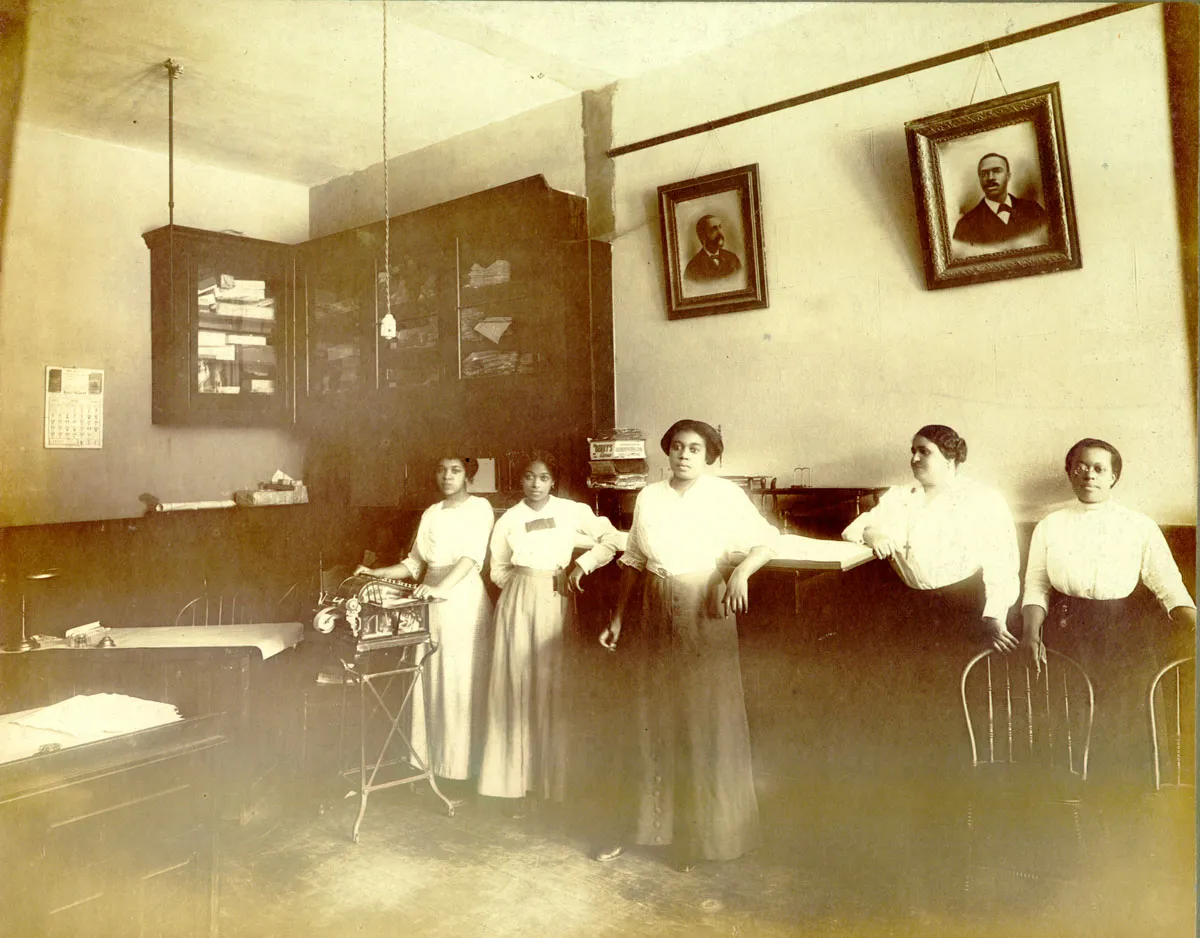 Photo: Maggie Lena Walker, via americanhistory.si.edu
In 1903, she became the first woman in American history to charter and serve as president of a bank. She did it in Richmond, Virginia. She did it in the Jim Crow South. She did it as a Black woman whose mother had been enslaved and who had herself worked as a laundress as a child. She did it because she found the door that nobody had bothered to lock, because nobody had expected her to go looking.
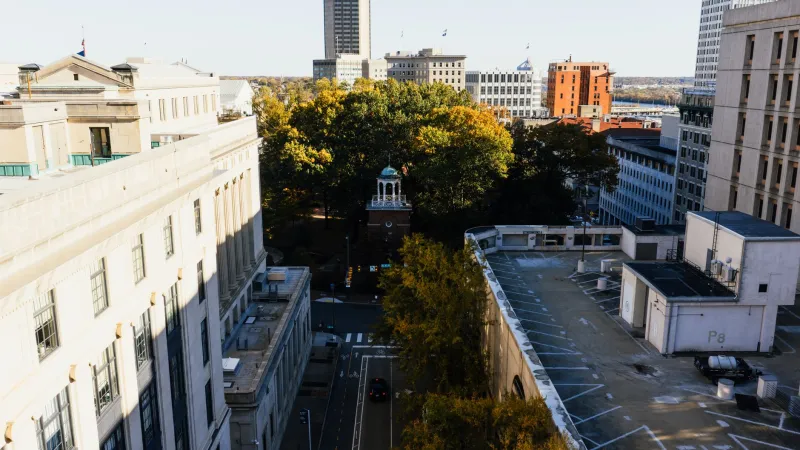
 Photo: Richmond, Virginia, via www.skydiveorange.com
The Education of Exclusion
Walker was born in 1864 in Richmond, the daughter of Elizabeth Draper, a formerly enslaved woman who worked as a cook in the household of abolitionist Elizabeth Van Lew. Her father's identity remains uncertain — some accounts name a white man connected to the household; others are less specific. What is certain is that Walker grew up in a city that was simultaneously the former capital of the Confederacy and one of the most vibrant centers of Black civic and economic life in the South.
She was smart, disciplined, and hungry in the way that people who grow up watching opportunity being handed to others tend to be. She attended the Colored Normal School in Richmond, trained as a teacher, and threw herself into the one institution that seemed genuinely available to her: the Independent Order of St. Luke.
The Order of St. Luke was a fraternal benefit society — one of the mutual aid organizations that Black communities across America had been building since the Civil War to provide the financial safety net that mainstream institutions refused to offer. Members paid small dues and received support during illness, death, and hardship. It was, in essence, a community insurance system run entirely outside the white financial establishment.
Walker joined as a teenager. By 1899, she was its executive secretary-treasurer.
Reading the Fine Print
What Walker inherited when she took over the Order of St. Luke was, by most measures, a mess. The organization had 3,400 members and $31.61 in the treasury. It was carrying debt. Its administrative systems were chaotic. Most people in her position would have focused on stabilizing what existed.
Walker looked at what didn't exist yet.
She understood that the Order of St. Luke's real asset wasn't its current membership or its treasury. It was its legal structure. As a chartered fraternal organization, it had a form of institutional legitimacy that individual Black citizens — and certainly Black women — were routinely denied. It could hold assets. It could conduct financial transactions. It existed, in the eyes of the law, in a way that she, as a woman, largely did not.
She began expanding the organization's scope with a methodical intensity that her contemporaries found remarkable. She launched a newspaper, the St. Luke Herald, in 1902 — partly to communicate with members and partly to build economic solidarity across Richmond's Black community. She established a department store, the St. Luke Emporium, specifically to create retail jobs for Black women who were excluded from every other commercial establishment in the city.
And then, in 1903, she chartered the St. Luke Penny Savings Bank.
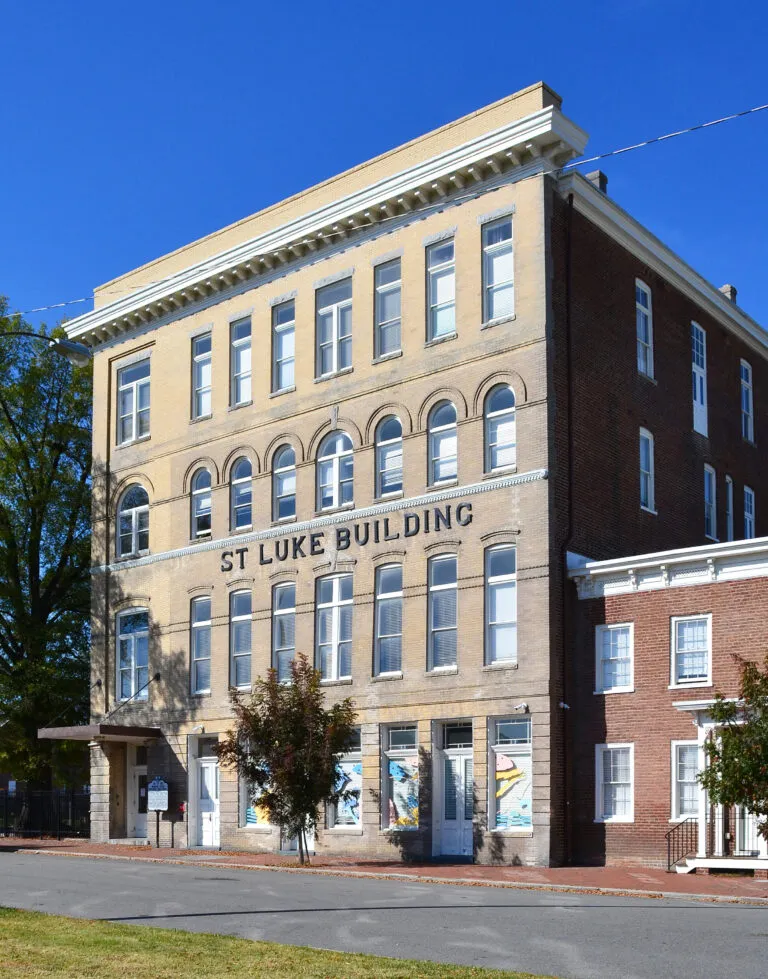 Photo: St. Luke Penny Savings Bank, via www.dhr.virginia.gov
The Bank That Wasn't Supposed to Exist
To understand what Walker did, it helps to understand what she was working against. In 1903, women in Virginia — and in most of the United States — could not sign contracts without their husband's consent. They could not open bank accounts independently in most circumstances. They had no legal standing to serve as corporate officers in most jurisdictions. The financial system had been constructed, in exhaustive detail, to exclude them.
But the laws governing fraternal organizations were written differently. They had been designed to regulate community benefit societies, not to anticipate a woman using one as the legal scaffolding for a full-scale banking institution. Walker had read those laws. She knew exactly where the language left room.
The St. Luke Penny Savings Bank opened on November 2, 1903, with Maggie Lena Walker as its president. It was capitalized at $25,000 — money raised entirely within Richmond's Black community, in small amounts, from people who had been told their entire lives that financial institutions were not for them.
The bank's mission was explicit: to serve the people that every other financial institution in Richmond had turned away. It offered savings accounts, made loans, and provided the kind of basic financial infrastructure that Black families in the city had never had reliable access to. It told depositors, in the most direct way possible, that their money was worth keeping.
Surviving What Should Have Broken It
The decades that followed tested the bank in ways that would have destroyed less carefully built institutions. The Depression hit Richmond's Black community with devastating force. Unemployment, foreclosure, and financial panic swept through the neighborhoods that the St. Luke Penny Savings Bank served. Other banks failed. The St. Luke bank merged with two other Black-owned institutions in 1930 to form the Consolidated Bank and Trust Company — a consolidation that Walker orchestrated specifically to preserve the financial infrastructure she had built, even if it meant giving up the name.
Consolidated Bank and Trust survived the Depression. It survived the mid-century. It survived into the twenty-first century as one of the oldest continuously operating Black-owned banks in the United States, a direct institutional descendant of the $31.61 treasury and the woman who decided it was a foundation.
Walker herself served on the board until her death in 1934, despite spending her final years in a wheelchair after a debilitating injury. She did not stop.
What She Actually Built
It would be easy to frame Walker's story purely as a story about breaking barriers, and it is that. But it's also something more specific. It's a story about institutional literacy — about understanding systems well enough to find the spaces they left open, and then using those spaces with more precision and more purpose than the system's designers ever imagined.
Walker didn't rage against the legal architecture that excluded her. She studied it. She found its gaps. She built inside them with the patience and the rigor of someone who understood that the work had to last longer than the outrage.
The door nobody locked was always there. She was just the one who went looking for it — and then held it open for an entire community behind her.