Her Name Was Nowhere on the Patent — But Her Invention Was in Every American Home
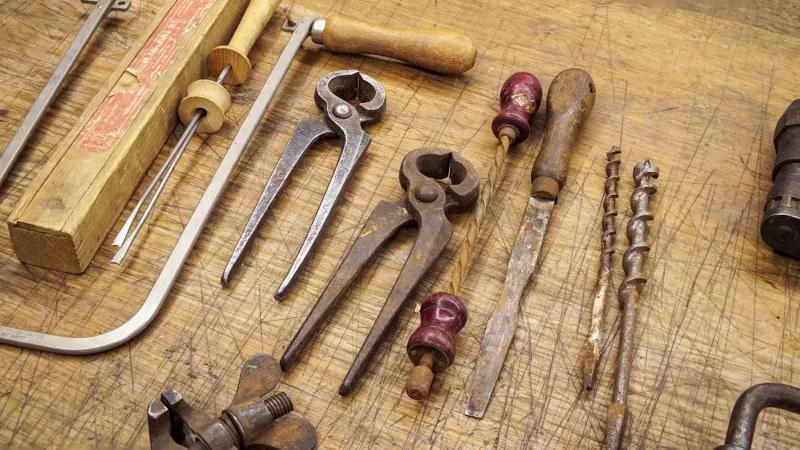
Picture a workbench in a back room of a house in rural Ohio, sometime in the late 1880s. The woman at the bench is not supposed to be there, technically speaking — not because she has broken any law, but because the entire legal and commercial architecture of her era has been constructed on the assumption that women do not invent things. They use things. They maintain things. They pass things down through households with quiet efficiency.
They do not, according to the U.S. Patent Office's effective operating logic at the time, originate things.
Martha Colvin knew this. She had known it for years. And she had spent those years figuring out what to do about it anyway.
The Problem She Kept Solving in Her Head
Colvin was, by all accounts that survive her, a practical woman in the deepest sense of that word — someone who experienced the world primarily as a series of problems that either had been solved or hadn't yet. She ran a household, raised children, managed the rhythms of domestic life in a way that demanded constant improvisation, and she paid attention to what didn't work.
The specific problem she turned her attention to in the mid-1880s was one that every woman of her era would have recognized immediately: the management of wet laundry. The existing tools were awkward, inconsistent, and hard on the hands. The wringing mechanisms available were either too complicated for regular use or too weak to do the job properly. Colvin believed she could design something better.
She was right. It took her roughly two years of evenings and early mornings, working around her regular responsibilities, but by 1887 she had a working prototype of a household wringing device that was simpler, more efficient, and considerably more durable than anything on the market. She had made it herself, refined it herself, and tested it herself.
Then she ran straight into the wall.
What the Law Said
The legal landscape for women inventors in the late nineteenth century was not merely discouraging — it was structurally hostile. Married women in most states could not hold property independently of their husbands under existing coverture laws, and while patent law was technically separate from property law, the Patent Office's practical interpretation of who qualified as a legitimate inventor was shaped by the same assumptions.
Colvin consulted a lawyer in Columbus who was as helpful as the system allowed him to be, which was not very. The options, as he laid them out, were limited: she could attempt to file in her own name and almost certainly face rejection or indefinite delay, she could abandon the invention, or she could file under her husband's name with a private arrangement between them.
Her husband, George Colvin, was a farmer with no particular interest in household innovation and, by the accounts of people who knew him, a temperament that combined mild bafflement with genuine good will. He did not fully understand what his wife had made. He also did not stand in her way.
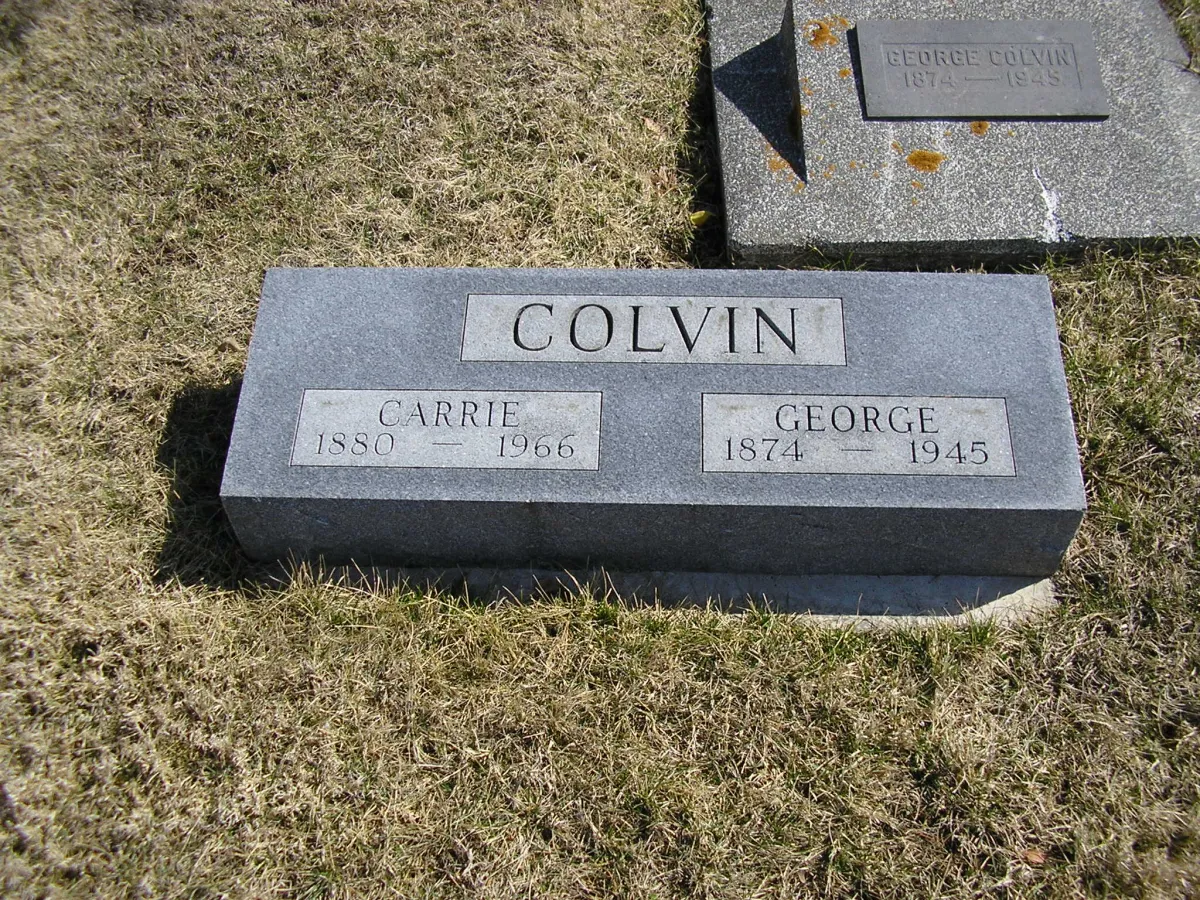 Photo: George Colvin, via images.findagrave.com
They made an arrangement. He would sign the papers. She would manage everything else.
The Patent and What Came After
The patent was filed in 1888 under George Colvin's name. Martha handled the correspondence with manufacturers, negotiated the licensing terms, and made the decisions about how the device would be modified for commercial production — all of it conducted through the cover of her husband's name, all of it invisible to the outside world.
The product reached the market in 1890 and spread with the quiet, unstoppable momentum that genuinely useful things tend to generate. Within five years it was being manufactured in three states. Within a decade it was a standard item in households across the country. Hardware catalogs listed it. General stores stocked it. Women bought it and recommended it to other women without any of them knowing that the person who had designed it was also a woman.
George Colvin, for his part, maintained the arrangement with a consistency that probably cost him some social standing — being known as the patent-holder of a domestic tool was not exactly a point of masculine pride in rural Ohio in the 1890s. But he held the line. When manufacturers came to negotiate, he referred them to his wife. When letters arrived from the Patent Office, he passed them to her unopened.
It was an unusual partnership for its era. It was also the only way the thing got made.
The Paper Trail
Martha Colvin died in 1923, and for most of the twentieth century her role in the invention that bore her husband's name was known only to family members and a small circle of local historians who had encountered the discrepancy between the patent records and the letters she had kept.
Those letters were the key. Colvin had saved everything — her early design sketches, her correspondence with manufacturers, the notes she had written to herself during the development process, and a series of letters to her sister in Pennsylvania that described the arrangement with George in plain terms and without apparent bitterness. She seemed to regard the whole situation as a practical obstacle she had navigated rather than an injustice she had suffered, though the line between those two things is thinner than it might appear.
A historian researching women inventors in the Midwest in the 1970s came across the letter collection through a great-grandchild and spent several years cross-referencing it against the patent record, the manufacturing history, and the commercial correspondence that had survived in business archives. The case she assembled was thorough and, ultimately, unambiguous: the invention was Martha Colvin's in every meaningful sense of the word.
The patent, of course, still bears George's name. Patent records don't get rewritten based on posthumous discoveries. The official record says what it says.
What She Understood That the System Didn't
There is a version of this story that frames Martha Colvin primarily as a victim, and that framing is not wrong exactly — she was denied something real, and the system that denied it to her was genuinely unjust. But it is also incomplete.
What the letters reveal is a woman who understood the constraints she was operating within and made deliberate, intelligent choices about how to work around them. She did not rage against the Patent Office. She did not wait for the law to change. She looked at the wall in front of her, found the door that was actually open, and walked through it with her eyes completely clear.
The invention reached the world. The households it entered were made easier by it. The women who used it were helped by it. That was what she had set out to accomplish, and she accomplished it.
Her name wasn't on the patent. But her thinking was in every single one.