Storm Watcher: The Lighthouse Keeper's Daughter Who Taught America to Read the Sky
The Island That Time Forgot
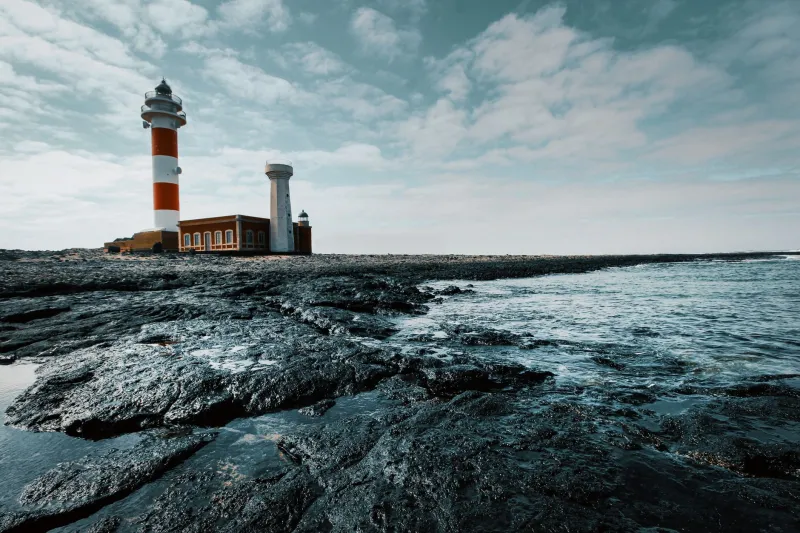
Twenty miles south of New Orleans, where the Mississippi River meets the Gulf of Mexico, sits a sliver of sand that most maps don't bother naming. In 1847, this unnamed island became home to fifteen-year-old Cordelia Trosclair when her father accepted the position of lighthouse keeper at the newly built Chandeleur Light Station.
 Photo: Gulf of Mexico, via cdn-s-www.leprogres.fr
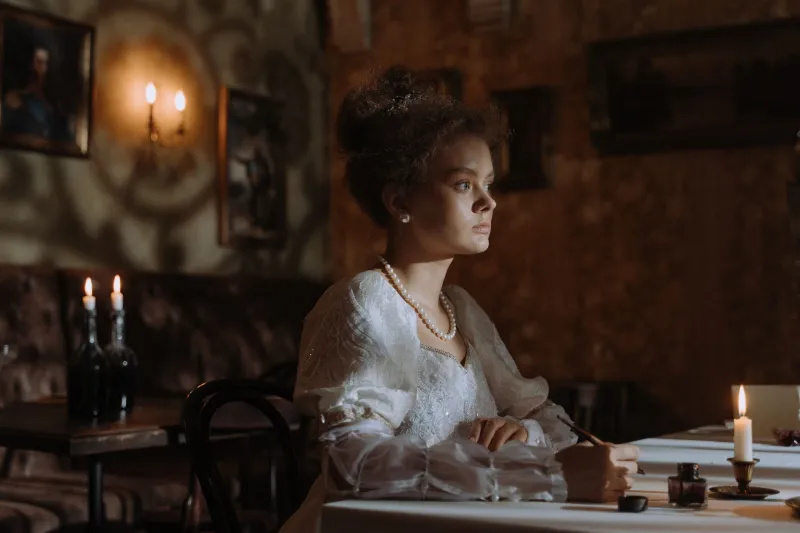
 Photo: Cordelia Trosclair, via statics.cedscdn.it
The isolation was complete. Supply boats came monthly, weather permitting. The nearest neighbor lived forty miles away. For most people, this would have been exile. For Cordelia, it became the perfect laboratory for understanding the sky.
A Different Kind of Education
While other young women her age learned piano and French, Cordelia studied clouds. Her father, Baptiste Trosclair, had grown up fishing these waters and taught his daughter to read weather signs the way others read books. But Cordelia took it further.
She began keeping detailed journals in 1849, recording not just daily weather but the behavior of birds, the color of sunset, the direction of wind shifts, and the height of tides. What started as a teenager's hobby became a forty-year scientific project that would revolutionize weather prediction.
The Language of Wind and Water
Cordelia developed her own system for cataloging atmospheric patterns. She noticed that certain combinations of cloud formations, wind directions, and animal behaviors preceded specific weather events. When pelicans flew inland three days running, it meant a storm was building. When the lighthouse cats refused to venture outside despite clear skies, rough weather would follow within hours.
Modern meteorologists would recognize her work as phenology—the study of natural seasonal phenomena. But in the 1850s, weather forecasting barely existed. The U.S. Weather Bureau wouldn't be established until 1870, and even then, its predictions were notoriously unreliable.
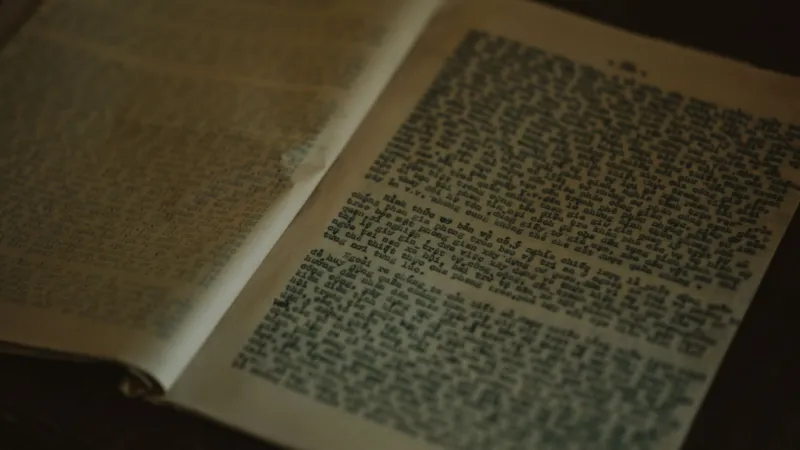
Cordelia's journals filled dozens of volumes. Each entry included date, time, temperature (measured with a homemade thermometer), wind direction and strength, cloud types and movements, tide levels, and detailed observations of local wildlife behavior. She developed her own notation system, using symbols and abbreviations that allowed her to capture complex atmospheric conditions in just a few lines.
The Test of Time
Cordelia's real breakthrough came in understanding storm cycles. She noticed that major hurricanes followed predictable patterns related to ocean temperature, seasonal wind shifts, and even lunar phases. By the 1860s, she could predict severe storms up to a week in advance with remarkable accuracy.
Local fishermen began consulting her before heading out to sea. Ship captains would send messages asking about weather conditions. Word spread through the Gulf Coast maritime community about the lighthouse keeper's daughter who could read storms like scripture.
But the scientific establishment dismissed her work. When Cordelia sent copies of her journals to the newly formed Weather Bureau in 1872, officials filed them under "folk beliefs" and never responded. Her lack of formal education and scientific training made her observations seem worthless to meteorologists trained in universities.
The Hurricane That Changed Everything
September 1893 brought one of the deadliest storms in Gulf Coast history. The Weather Bureau issued no warnings—their instruments detected nothing unusual. But Cordelia's observations told a different story. The pelicans had disappeared. Dolphins were swimming in unusual patterns. The sunset had been the wrong shade of orange for three consecutive nights.
She sent urgent warnings to every contact she had along the coast. Most ignored her—what could an isolated woman know that trained meteorologists had missed? But some listened. The fishing village of Buras evacuated based on her warning. The port town of Venice moved ships to safer harbors.
When the hurricane struck with devastating force, Buras and Venice suffered minimal casualties while unprepared communities lost hundreds of lives. Cordelia's predictions had been accurate to within hours.
Recognition at Last
The 1893 hurricane caught the attention of Dr. Isaac Cline, the Weather Bureau's chief meteorologist for the Gulf region. Cline was intrigued by reports of accurate storm predictions from an untrained observer and traveled to Cordelia's island in 1894.
What he found amazed him. Cordelia's journals contained forty-five years of meticulous weather data—more comprehensive than any official weather station. Her observations were scientifically sound, her predictions remarkably accurate. She had independently developed techniques that wouldn't become standard meteorological practice for another twenty years.
Cline convinced the Weather Bureau to hire Cordelia as an official observer in 1895. At age sixty-three, she became one of the first women in the federal weather service. Her station became a key data collection point for Gulf Coast storm tracking.
The Legacy of Looking Up
Cordelia Trosclair died in 1904, but her influence on weather forecasting lasted decades. Dr. Cline used her methods to develop the first reliable hurricane warning system for the Gulf Coast. Her journals became training materials for meteorologists learning to predict severe weather.
The techniques she pioneered—combining instrumental measurements with biological indicators—remain standard practice today. Modern weather forecasting still relies on many of the same natural signs Cordelia documented in her lighthouse journals.
Lessons from the Light
Cordelia's story reveals something profound about expertise and recognition. While scientists in universities studied weather theory, a lighthouse keeper's daughter was conducting practical meteorology that saved lives. Her isolation, which seemed like a disadvantage, actually gave her something invaluable: uninterrupted time to observe and understand natural patterns.
She succeeded because she trusted her observations over conventional wisdom. When established experts dismissed her work, she kept recording. When her predictions contradicted official forecasts, she stood by her data. Her persistence turned decades of careful watching into life-saving science.
In an age that valued formal credentials over practical knowledge, Cordelia Trosclair proved that the best education sometimes comes from paying attention to the world around you. She didn't need a degree to read the sky—she just needed forty years of looking up.