Shut Out and Proven Right: When Science's Gatekeepers Got It Wrong

The Paradox of Progress
Scientific institutions exist to advance human knowledge, but they've also perfected the art of rejecting the very discoveries that transform our understanding of the world. The gatekeepers of American science—university committees, grant review boards, and peer reviewers—have an almost supernatural ability to dismiss breakthrough ideas as impossible, impractical, or insufficiently credentialed.
These seven stories reveal a pattern: the most revolutionary discoveries often come from people working outside traditional systems, driven by curiosity rather than career advancement.
Barbara McClintock: The Corn Geneticist They Called Crazy
In 1951, Barbara McClintock presented evidence that genes could move within chromosomes—a concept so radical that her fellow scientists essentially ignored her for two decades. The Carnegie Institution kept funding her corn research, but only because she'd been productive in more conventional areas.
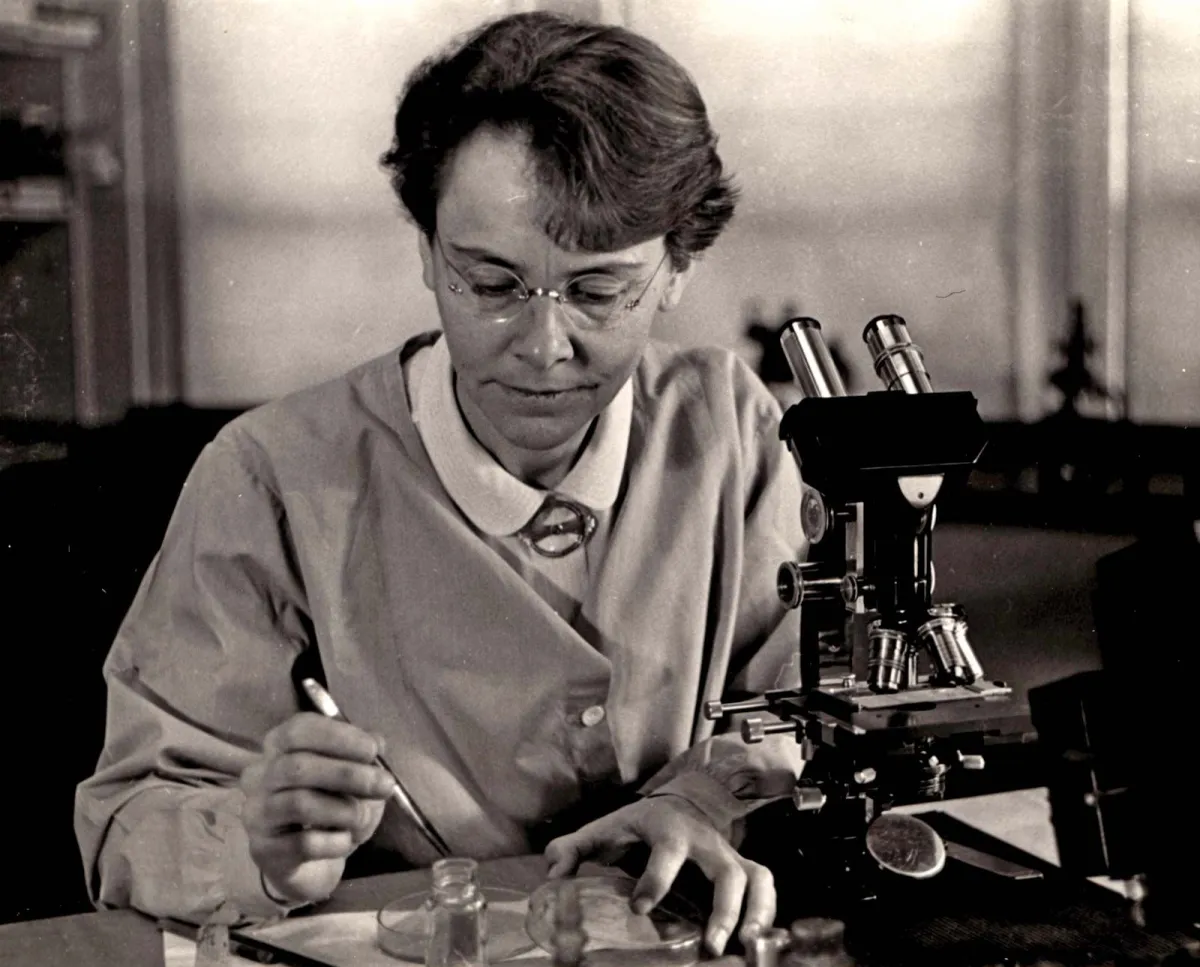 Photo: Barbara McClintock, via cdn.britannica.com
McClintock's "jumping genes" contradicted everything biologists thought they knew about heredity. Genes were supposed to stay put, lined up like soldiers on chromosomes. The idea that they could hop around seemed to violate the basic rules of genetics.
She continued her work in relative isolation, developing increasingly sophisticated techniques for tracking genetic movement in corn plants. Her notebooks from this period read like detective stories, full of careful observations about color patterns and kernel arrangements that revealed the hidden mobility of genetic material.
When molecular biology finally caught up to her insights in the 1970s, McClintock's "impossible" jumping genes became the foundation for understanding genetic regulation, evolution, and disease. She won the Nobel Prize in 1983, thirty-two years after her initial discovery.
Ignaz Semmelweis: The Doctor Who Insisted on Clean Hands
Vienna General Hospital in the 1840s had a puzzling problem: women giving birth in the ward staffed by doctors died at five times the rate of those in the midwife ward. Hungarian physician Ignaz Semmelweis noticed the pattern and proposed a shocking explanation: doctors were carrying death on their hands.
 Photo: Vienna General Hospital, via mediglobus.com
Semmelweis had observed that doctors often came directly from autopsy rooms to delivery wards without washing their hands. He instituted a policy requiring chlorinated lime handwashing between the morgue and maternity ward. Death rates plummeted immediately.
The medical establishment's response was swift and brutal. The idea that gentlemen doctors could be spreading disease was considered insulting and unscientific. Semmelweis was dismissed from his position, blacklisted from Vienna's medical community, and eventually suffered a mental breakdown.
Germ theory wouldn't be accepted for another twenty years. By then, Semmelweis had died in an asylum, vindicated only after millions of unnecessary deaths could have been prevented with soap and water.
Gregor Mendel: The Monk Whose Math Didn't Add Up
Gregor Mendel's experiments with pea plants in his monastery garden produced the mathematical laws of heredity that form the foundation of modern genetics. When he presented his findings to the Natural History Society of Brünn in 1865, the response was polite indifference.
The problem wasn't just that Mendel was a monk rather than a university researcher—it was that his mathematical approach to biology seemed foreign to scientists who thought of life as too complex for simple ratios and predictable patterns.
Mendel's laws of inheritance were rediscovered independently by three different researchers in 1900, thirty-five years after his original work. The delay cost biology decades of progress in understanding heredity, evolution, and genetic disease.
Alfred Wegener: The Weatherman Who Moved Continents
German meteorologist Alfred Wegener proposed in 1912 that continents drift across the Earth's surface over geological time. His evidence was compelling: matching fossils on opposite sides of oceans, similar rock formations on different continents, and the obvious puzzle-piece fit of continental margins.
The geological establishment rejected continental drift immediately and decisively. Wegener wasn't a geologist, they argued, and he couldn't explain the mechanism that would move entire continents. Without a plausible force to drive continental movement, his theory was dismissed as fantasy.
Wegener died in 1930, still defending his ideas against scientific ridicule. It took until the 1960s for plate tectonics to provide the mechanism Wegener couldn't identify, finally proving that continents do indeed drift across the planet's surface.
Rosalind Franklin: The X-Ray Crystallographer They Overlooked
Rosalind Franklin's X-ray crystallography work at King's College London produced the clearest images of DNA structure ever captured, including Photo 51—the image that revealed DNA's helical structure. Her meticulous measurements and mathematical analysis laid the groundwork for understanding the molecule of life.
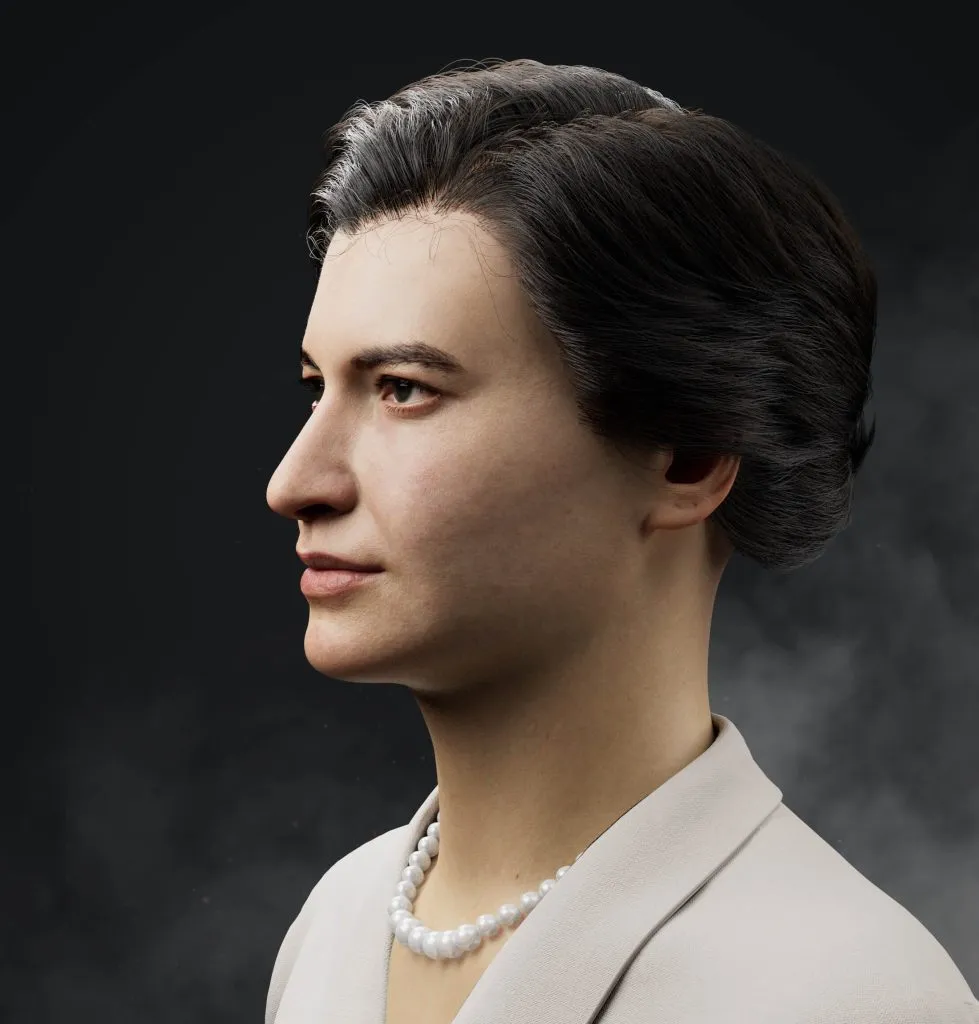 Photo: Rosalind Franklin, via breakthrough.neliti.com
Franklin's work was shared with competitors James Watson and Francis Crick without her knowledge or consent. They used her data to complete their own model of DNA structure, winning the Nobel Prize in 1962. Franklin had died four years earlier from cancer, possibly caused by radiation exposure from her X-ray work.
The scientific community's treatment of Franklin reflected both institutional sexism and a tendency to credit theoretical breakthroughs over experimental work. Her precise measurements made Watson and Crick's theoretical model possible, but she received little recognition during her lifetime.
Daniel Shechtman: The Metallurgist Who Found Impossible Crystals
In 1982, materials scientist Daniel Shechtman observed a crystal structure that shouldn't exist according to the fundamental laws of crystallography. His "quasicrystals" had five-fold symmetry—a geometric arrangement that violated basic principles about how atoms organize themselves in solid materials.
The response from the crystallography community was immediate and harsh. Linus Pauling, the Nobel laureate and chemistry legend, dismissed Shechtman's discovery with the cutting remark: "There is no such thing as quasicrystals, only quasi-scientists."
Shechtman was asked to leave his research group and faced years of ridicule from colleagues who insisted his observations were artifacts of experimental error. He persisted, refining his techniques and gathering more evidence for these "impossible" structures.
Quasicrystals are now recognized as a new form of matter with unique properties useful in everything from non-stick coatings to LED lights. Shechtman won the Nobel Prize in Chemistry in 2011, nearly thirty years after his initial discovery.
Lynn Margulis: The Biologist Who Saw Cooperation Instead of Competition
Evolutionary biologist Lynn Margulis proposed in the 1960s that complex cells evolved through symbiosis—smaller organisms living cooperatively inside larger ones—rather than through gradual genetic changes alone. Her theory suggested that mitochondria and chloroplasts were once independent bacteria that became permanent cellular residents.
The idea was rejected by fifteen different journals before finally being published. The scientific establishment was committed to a view of evolution driven by competition and random mutation. Margulis's emphasis on cooperation as an evolutionary force seemed to contradict Darwinian principles.
Her symbiotic theory is now accepted as fact, fundamental to understanding how complex life evolved on Earth. The organelles in our cells really are domesticated bacteria, and cooperation turns out to be as important as competition in evolutionary history.
The Pattern Behind the Rejections
These stories share common threads: established scientists protecting conventional wisdom, institutional resistance to ideas from outsiders, and the tendency to mistake credentialism for competence. In each case, the rejected researcher was ultimately vindicated, often decades later.
The lesson isn't that all rejected ideas are correct—most aren't. But the pattern suggests that scientific institutions, for all their value in maintaining standards and preventing fraud, also systematically filter out revolutionary insights that don't fit existing frameworks.
Progress in science requires both rigorous skepticism and openness to radical possibilities. The challenge is knowing when to trust the gatekeepers and when to bet on the outcasts with impossible ideas.