Blueprints in the Trash: How a Sanitation Worker Designed a City's Future

The Education Hidden in Plain Sight
Every Tuesday and Friday for seventeen years, Frank Kowalski's garbage route took him through Chicago's architectural district. While other sanitation workers focused on efficiency—load, compact, move on—Kowalski developed a peculiar habit. He'd pause at the dumpsters behind drafting firms, construction companies, and engineering offices, fishing out crumpled blueprints, rejected designs, and marked-up building plans.
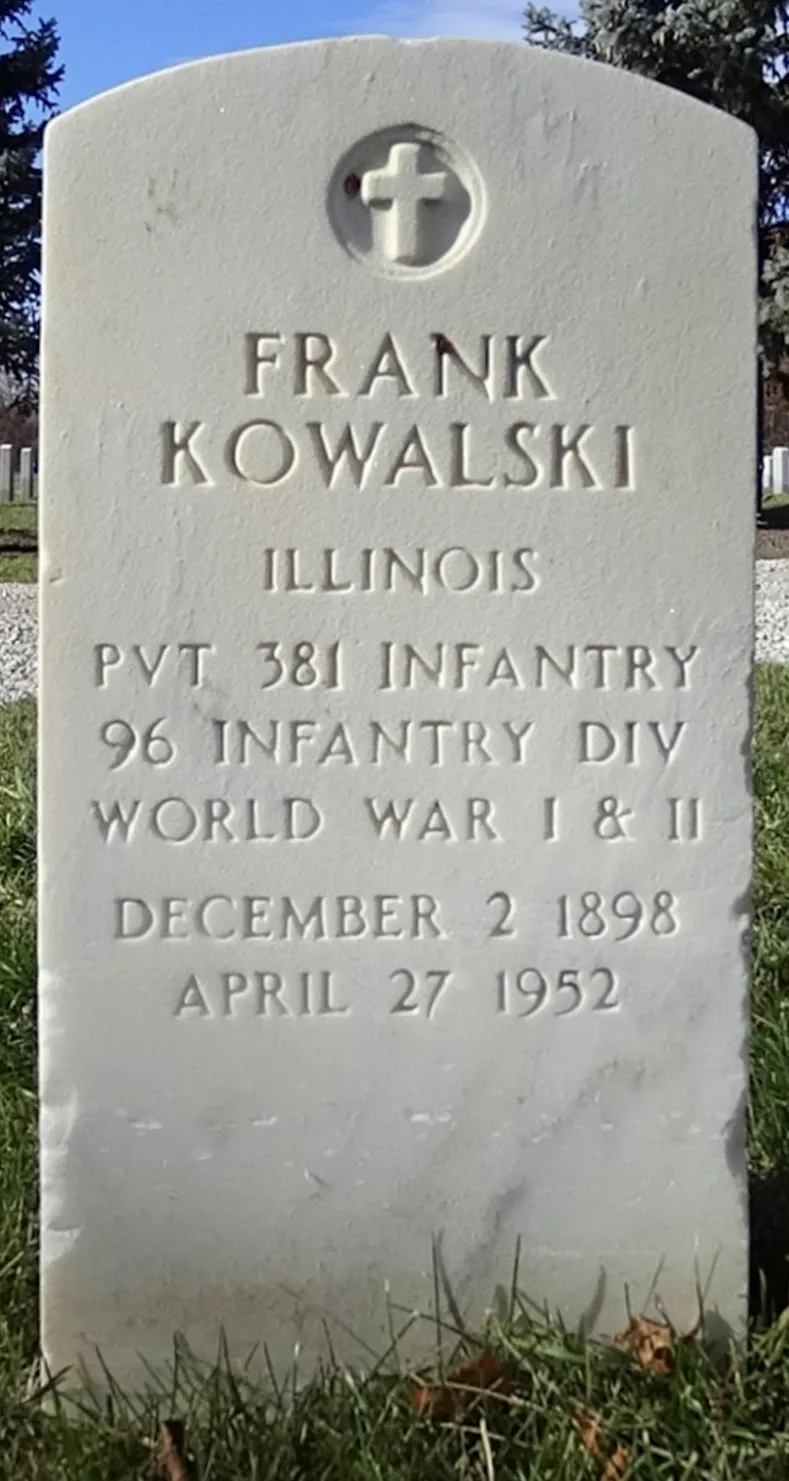 Photo: Frank Kowalski, via veteranslegacy.sau.edu
His coworkers thought he was crazy. His wife thought he was hoarding. But Kowalski was building something neither group could see: an unconventional education in the language of structures, foundations, and load-bearing dreams.
"Most people see trash," Kowalski once told a reporter years later. "I saw textbooks that someone else had paid for."
The Night School That Never Closed
After his shifts ended, Kowalski would spread the rescued blueprints across his kitchen table. With a magnifying glass and a growing collection of drafting tools purchased from pawn shops, he began to decode the grammar of architecture. He studied why certain designs were rejected, traced the penciled corrections in margins, and began to understand the gap between what looked good on paper and what actually stood up in Chicago's unforgiving weather.
The discarded plans told stories. Failed shopping centers revealed the mathematics of foot traffic. Rejected apartment complexes showed him how sound traveled through walls. Abandoned office buildings taught him about wind loads and thermal expansion. Each piece of architectural refuse became a case study in what didn't work—and more importantly, why.
By 1987, Kowalski had accumulated over 3,000 architectural drawings. His basement looked like a cross between a recycling center and a design studio. He'd taught himself structural engineering from the mistakes of others, developing an intuitive understanding of how buildings behaved under stress that most architects never acquired.
When Desperation Calls
In 1989, the Chicago Housing Authority faced an impossible deadline. A federal mandate required them to replace a condemned housing complex within eighteen months, but every architectural firm they approached said the timeline was unrealistic. The site presented multiple challenges: contaminated soil, irregular dimensions, and strict budget constraints that made conventional solutions impossible.
 Photo: Chicago Housing Authority, via publicaffordablehousing.com
Desperate, the CHA issued an open call for proposals. Among the submissions from established firms came a hand-drawn set of plans from Frank Kowalski, garbage collector and self-taught architect.
His design was unlike anything the review committee had seen. Instead of fighting the site's irregularities, Kowalski's plan embraced them. He'd designed a modular system that could be adapted to contaminated areas, incorporated natural drainage patterns that eliminated expensive infrastructure, and created community spaces that seemed to grow organically from the landscape.
"We kept looking for the catch," remembered committee member Sandra Chen. "The design was so practical, so elegant in its simplicity, that we assumed we were missing something."
The Proof in the Concrete
The CHA took a calculated risk. They awarded Kowalski a small pilot project: four residential units that would test his design principles. Working with licensed contractors and engineers who could handle the legal requirements, Kowalski oversaw construction of his first official buildings.
The results were remarkable. The units came in 15% under budget and three weeks ahead of schedule. More importantly, they solved problems that had plagued public housing for decades. The natural ventilation system eliminated mold issues. The modular design allowed for easy maintenance and future modifications. The community spaces actually got used.
Word spread quickly through Chicago's architectural community. Here was a garbage collector who understood buildings better than people who'd spent six years in graduate school.
Recognition Without Credentials
Over the next decade, Kowalski designed over 200 residential units, three community centers, and a library that won a national design award. He never earned a degree, never passed a licensing exam, and never stopped working his garbage route—though he eventually negotiated a schedule that gave him more time for architectural projects.
His buildings developed a reputation for being both beautiful and bulletproof. They aged well, required minimal maintenance, and seemed to anticipate problems before they occurred. Architecture critics struggled to classify his work, which combined modernist efficiency with an almost folk art sensibility.
"Frank designs like someone who's seen every way a building can fail," observed architectural historian Dr. Maria Santos. "Because he literally has."
The Lesson in the Refuse
Kowalski's story challenges fundamental assumptions about expertise and education. While his formally trained peers learned architecture from idealized examples, he learned from failures and mistakes. While they studied what buildings should do, he observed what buildings actually did under real-world conditions.
His success suggests that sometimes the most valuable education happens outside traditional institutions. The blueprints in those dumpsters weren't just refuse—they were a master class in practical architecture, taught by the accumulated mistakes of an entire industry.
Today, several architecture schools include "failure analysis" in their curricula, studying rejected designs and failed structures to understand why things go wrong. It's an approach that Frank Kowalski pioneered from the back of a garbage truck, proving that sometimes the most important lessons are the ones someone else threw away.