What the Man with the Mop Already Knew: The Hospital Cleaner Who Changed How America Fights Infection
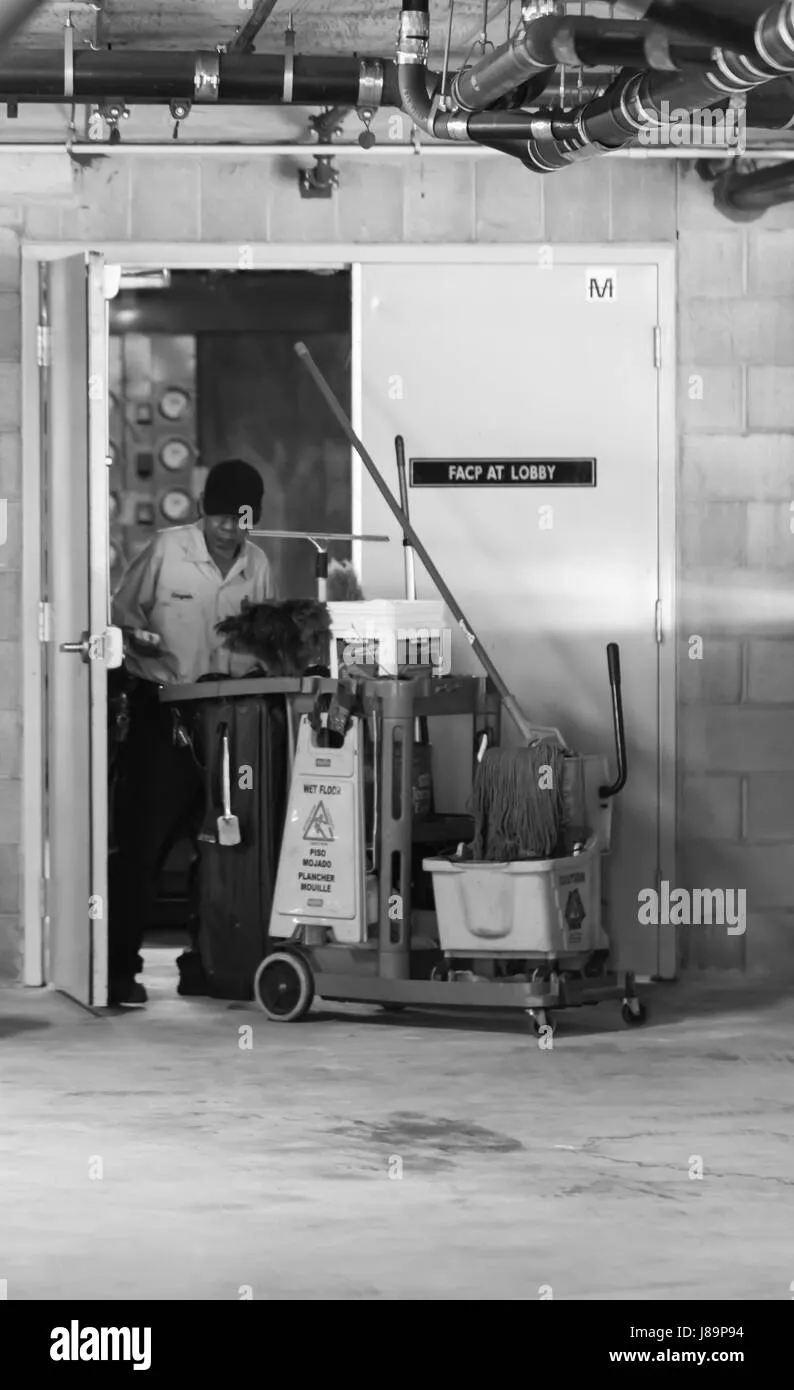
Photo: hospital janitor cleaning corridor vintage black and white, via c8.alamy.com
Every morning, before the surgeons arrived and the administrators settled into their chairs, Ignacio Gomez was already there. Pushing a cart through dimly lit corridors, wiping down surfaces that most people never thought twice about, watching. Always watching.
He wasn't supposed to notice anything beyond the scope of his job description. But Ignacio had a habit he couldn't shake — the habit of paying attention.
What he saw troubled him deeply. And what he eventually did about it quietly rewired the way American hospitals think about cleanliness, patient safety, and who actually holds the knowledge that saves lives.
The Invisible Workforce in Plain Sight
By the mid-twentieth century, American hospitals had developed a rigid hierarchy. Physicians sat at the top. Nurses occupied the middle tier. And at the very bottom — nearly invisible to the institution itself — were the people who cleaned it.
Environmental services workers, as they're now called, were treated as interchangeable. Their work was considered unskilled, their observations irrelevant. Nobody asked a janitor what he thought about infection rates. Nobody asked him what he'd seen.
That was the problem.
Because Ignacio, working in a large public hospital in the American Southwest during the 1960s, was seeing things that should have alarmed everyone. Doctors moving between patients without washing their hands. Mop heads used across multiple wards without being changed. Surgical equipment rinsed but not properly sterilized. IV lines touched by gloved hands that had just touched everything else.
He wasn't reading medical journals. He didn't need to. He was watching people get sick — patients who had come in for routine procedures and left in worse shape than they arrived, or didn't leave at all.
The First Time He Spoke Up
Ignacio tried to raise his concerns through the proper channels, which is to say, he mentioned them to his direct supervisor. He was told, politely but firmly, that cleaning schedules were already optimized and that medical decisions were made by medical staff.
He tried again. He wrote a note — careful, respectful, specific — and passed it to a charge nurse he'd come to trust. She read it, nodded, and he never heard anything more about it.
For most people, that would have been the end. You learn the boundaries of your lane. You keep your head down. You push the cart.
But Ignacio had spent enough time in hospital corridors to understand something that the people behind the administrative doors had missed: the patients dying of post-operative infections weren't statistics. They were the man in room 14 who'd been recovering well. They were the woman in room 22 whose family visited every evening.
He kept a notebook. He started writing down what he observed — dates, locations, patterns. It wasn't research in any formal sense. It was just one careful man refusing to unsee what he'd seen.
The Unlikely Alliance
The turning point came when a young resident physician, fresh from training and still idealistic enough to listen to anyone who had something useful to say, noticed Ignacio watching him work. Instead of dismissing the janitor, the doctor asked what he was looking at.
Ignacio showed him the notebook.
What happened next was the kind of collaboration that institutions rarely allow and almost never celebrate. The two men — one with a medical degree, one with a mop — began meeting informally, comparing observations. The resident started documenting Ignacio's findings alongside his own clinical data. The patterns became impossible to ignore.
Cross-contamination between wards. Cleaning protocols that were theoretical on paper and entirely different in practice. A hospital culture that treated environmental hygiene as a separate, lesser concern from medical care — when in fact, the two were inseparable.
What Changed, and Why It Took So Long
The findings eventually reached the hospital's infection control committee, though Ignacio's name was not prominently attached to them. That's a familiar story. The knowledge travels upward; the source stays behind.
But the changes were real. The hospital overhauled its cleaning protocols. Mop heads were changed between wards. Hand-washing stations were repositioned and their use made mandatory. Environmental services staff were brought into infection control briefings for the first time — given information about why their work mattered, not just instructions about where to point the mop.
Infection rates dropped. The numbers were documented. Other hospitals took notice.
Over the following decades, the integration of environmental services workers into hospital safety culture became a slowly growing movement within American healthcare. By the 1980s and 1990s, research was confirming what Ignacio had known by observation alone: that the people who cleaned hospitals were among the most important infection-control agents in the building, and that excluding them from safety planning was not just disrespectful — it was dangerous.
The Lesson the Clipboard Missed
Ignacio Gomez never became famous. His name doesn't appear in the standard histories of infection control, which tend to credit the researchers and administrators who formalized and published the findings. That's how institutions work. They absorb the insight and credit the credential.
But his story — and the stories of countless frontline workers like him — points to something that American healthcare has been slowly, grudgingly learning ever since: expertise isn't always where the diploma hangs.
The person who spends eight hours a day in a space sees it differently than the person who passes through it for twenty minutes. The worker who touches every surface knows which ones get skipped. The cleaner who watches a hundred handwashing moments knows which ones are real and which ones are theater.
Ignacio didn't revolutionize healthcare by inventing anything. He did it by noticing. By refusing to stop noticing. By finding one person willing to listen.
In a system built to ignore him, he found a way to be heard. And the patients who never knew his name are, in some small but measurable way, alive because of it.
That's the odd thing about where change actually comes from. It's rarely the corner office. It's usually the corridor — pushed along, quietly, by someone most people walk right past.