Buried Ambitions: The Ohio Gravedigger Who Quietly Patented His Way to a Fortune
The Man Nobody Noticed
There is a particular kind of invisibility that comes with certain jobs. Gravediggers occupy that category absolutely. They arrive before the mourners, they leave after the mourners, and almost nobody looks directly at them. For most of Elias Croft's working life in Morrow County, Ohio, that invisibility suited him just fine. It gave him time to think.
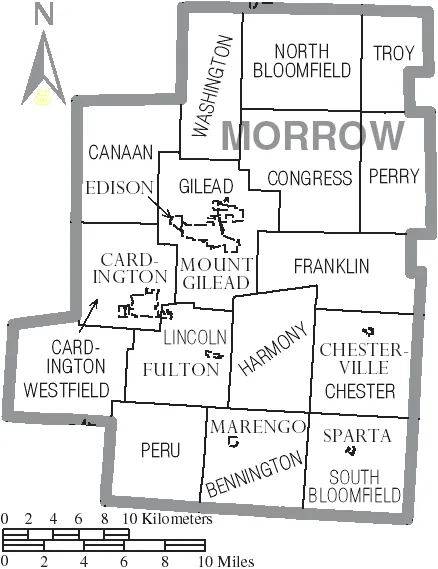 Photo: Morrow County, Ohio, via de-academic.com
Croft took the groundskeeper position at Harmony Hill Cemetery sometime around 1871, a few years after returning from a brief and unremarkable stint working a farm equipment supply route through central Ohio. He was not especially educated. He had no engineering background, no formal drafting training, and no obvious reason to believe that anything he put on paper would ever matter to anyone beyond himself. And yet, every night after supper, he lit the lamp in his small workshed and drew.
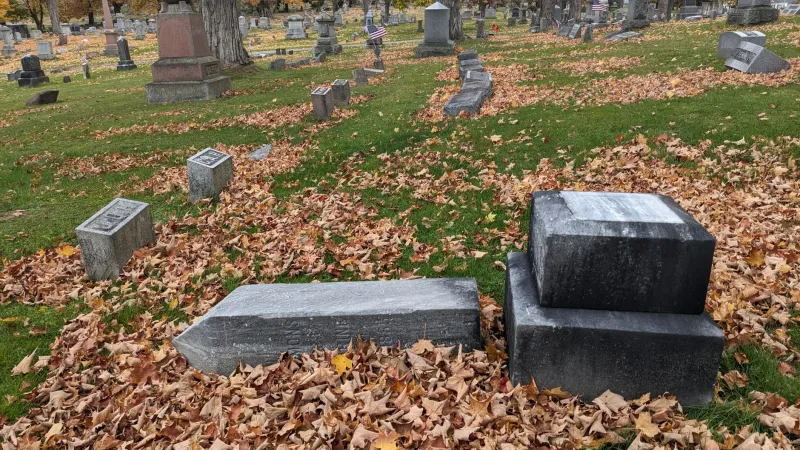
 Photo: Harmony Hill Cemetery, via www.usgwarchives.net
The first sketches were rough — barely legible by anyone else's standards. But they were precise in the ways that counted. Croft was not drawing fantasies. He was drawing problems he had already solved in his head, working backward from the solution to get it down on paper.
What Graves Taught Him About Machines
It would be easy to romanticize what Croft saw at work every day, and the temptation should probably be resisted. He was not a philosopher. He was a man with a shovel and a bad back and a deep, practical frustration with tools that didn't work the way they should.
But there was something else happening, too.
Morrow County in the 1870s and 1880s was prosperous enough that its cemetery saw a regular procession of well-dressed families burying well-dressed relatives. Croft watched farmers who had done well bury their fathers. He watched merchants who had built something real grieve the loss of time they hadn't used. He was not morbid about it — by all accounts, he was a cheerful and sociable man — but the proximity to death gave him a specific kind of urgency that is hard to manufacture any other way.
He talked about it once, in a brief letter to his brother preserved in the Morrow County Historical Society's archives. "I see men buried every week who built nothing," he wrote, "and men buried who built plenty, and the dirt goes over both of them the same. I intend to leave something that stays above the ground."
That letter was written in 1879. By then, he had already filed his first two patents.
The Shovel That Started Everything
Croft's earliest inventions were almost embarrassingly literal. The first patent, filed in 1877 and granted the following year, was for a modified spade head with an articulated collar that reduced the torque transferred to a user's wrists during heavy clay digging. He had designed it because his wrists hurt. The problem was that simple.
The solution, however, was not. Croft's collar design used a pivot point and a small tension spring concealed within the socket that effectively absorbed lateral force without sacrificing downward pressure. It was mechanically elegant in a way that suggested either genuine instinct or remarkable luck — and given that he refined it successfully across three subsequent iterations, instinct seems more likely.
A Cincinnati implement manufacturer named Harrow & Sons acquired the license for that first design in 1881 for what Croft's correspondence suggests was a modest but meaningful sum. Modest enough that he kept digging graves. Meaningful enough that he built a better workshed.
The patents that followed moved steadily away from burial tools and toward broader agricultural applications. A lever-assist mechanism for seed drills. A self-clearing tine design for cultivators that reduced clogging in wet soil. A chain-drive adjustment system for early mechanical reapers that allowed tension calibration without removing the chain entirely — a feature that farm equipment engineers had apparently been circling for years without landing on.
By 1893, Croft had secured nine patents. By 1901, seventeen.
The Physics of Hard Labor
What made Croft's designs consistently useful was something that formal engineers of his era often lacked: an intimate, physical understanding of what sustained labor actually does to a human body.
He knew, from years of digging, exactly where fatigue accumulates. He knew which movements could be sustained for hours and which ones broke a man down by midmorning. He knew the difference between a tool that worked well in a demonstration and a tool that worked well on the fortieth repetition of the day.
That knowledge showed up in his patents in ways that were quietly radical. His cultivator tine design, for instance, was praised in a 1904 trade publication not just for its self-clearing function but for the way it reduced the corrective micro-adjustments a farmer had to make during a long row — adjustments so small and constant that most engineers hadn't even identified them as a source of fatigue. Croft had identified them because he had felt their equivalent every single day.
The agricultural equipment industry of the late nineteenth century was full of inventors who understood machines. Croft understood the men who used them. That was the gap he kept falling into, and it kept paying off.
What He Left Above the Ground
Croft retired from Harmony Hill sometime around 1905, having accumulated enough in patent licensing fees to live comfortably by the standards of rural Ohio. He never moved away. He never sought publicity. Several of the companies that licensed his designs apparently had no idea, for years, that the inventor behind the patents was a cemetery groundskeeper.
When a reporter from a Columbus agricultural journal tracked him down in 1907 for a brief profile, Croft was sixty-one years old, still living in the same house behind the cemetery, and still drawing in his workshed in the evenings — though he admitted the ideas came more slowly now.
The reporter asked him what had driven him to keep inventing through all those years of physical labor, when it would have been so much easier to simply rest.
Croft's answer, as printed in the journal, was characteristically plain. "I dug a lot of holes for a lot of people," he said. "Seemed right to fill a few things in, too."
Seventeen patents. One shed. One lamp. And a cemetery full of quiet urgency, reminding him every single day that time was the one thing he couldn't afford to waste.